What Is the Dark Web? Facts vs Fiction
The dark web is often confused with the deep web and painted as purely criminal. Here's what it actually is, and isn't.
The term dark web gets thrown around a lot, usually attached to scary headlines about stolen credit cards, hackers, and things you supposedly can’t unsee. That reputation isn’t entirely wrong, but it’s also not the whole picture. Most people who talk about the dark web have never actually visited it, and a lot of what circulates online is exaggerated, outdated, or just plain false.
In reality, the dark web is a small, technically distinct part of the internet that requires specific software to access. It was originally built for privacy and anonymity, not crime, and it’s still used today by journalists, researchers, activists, and ordinary privacy-conscious people, alongside the criminal marketplaces that get all the attention.
This article breaks down what the dark web actually is, how it differs from the deep web and surface web, what really happens there, and which popular claims are myths. Whether you’re curious out of general interest, worried about your personal data, or just tired of vague explanations, you’ll walk away with a clear, accurate understanding instead of internet folklore.
What Is the Dark Web, Exactly?
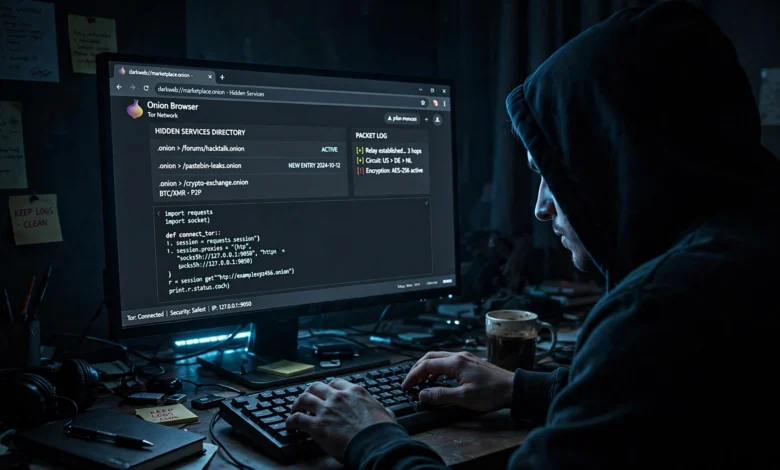
The dark web is a collection of websites that exist on encrypted networks and cannot be found through standard search engines like Google or Bing. You can’t stumble onto it by accident. Accessing the dark web requires specific software, most commonly the Tor browser (The Onion Router), which routes your connection through multiple encrypted relays scattered across the globe.
This routing process hides the user’s IP address and location, making it very difficult to trace who is visiting a site or who is hosting it. Dark web addresses typically end in .onion rather than familiar extensions like .com or .org, and they can’t be accessed through Chrome, Safari, or Firefox without additional configuration.
It’s worth noting the dark web is not one single “place.” It’s more accurate to think of it as a layer of the internet built on top of existing infrastructure, using encryption and anonymization tools to keep both the site operators and visitors hidden from each other and from outside observers.
Dark Web vs. Deep Web vs. Surface Web
One of the biggest sources of confusion is the difference between the dark web, the deep web, and the surface web. These terms get used interchangeably, but they describe very different things.
Surface Web
This is the part of the internet indexed by search engines. News sites, social media, online stores, and blogs (like the one you’re reading right now) all live here. Estimates suggest the surface web makes up only a small fraction of everything that exists online, somewhere in the range of 4–10%.
Deep Web
The deep web refers to any content not indexed by search engines, but that doesn’t mean it’s hidden or sinister. This includes:
- Online banking portals
- Private company databases
- Academic journals behind paywalls
- Medical records
- Email inboxes
- Cloud storage accounts
You access the deep web every day without realizing it. Logging into your email or checking your bank balance both count as deep web activity. It’s estimated the deep web makes up the vast majority of the internet.
Dark Web
The dark web is a small subset of the deep web that has been intentionally hidden and requires special tools like Tor or I2P to access. Unlike the rest of the deep web, which is just unindexed, the dark web is specifically designed for anonymity. This is where the confusion often starts, since people assume “deep web” and “dark web” mean the same thing, when the dark web is really just one small, specialized corner of it.
How the Dark Web Actually Works
Understanding the mechanics helps separate fact from fiction. The dark web relies on onion routing, a technique developed in the mid-1990s by the U.S. Naval Research Laboratory, ironically, for protecting government communications.
Here’s a simplified version of how it works:
- When you use Tor, your traffic is encrypted in layers, like an onion.
- Your connection bounces through at least three random relay servers (also called nodes) before reaching its destination.
- Each relay only knows the location of the node before it and after it, never the full path.
- The final relay decrypts the last layer and sends the request to the destination site.
This layered encryption makes it extremely difficult to trace a user’s identity or location back to their original device. It’s also why dark web pages load noticeably slower than typical websites, since your data is taking a long, winding route instead of a direct one.
For anyone wanting a technical deep dive into how Tor’s anonymity network functions, the Tor Project’s official overview is a solid, authoritative resource straight from the organization that built it.
Common Myths About the Dark Web
Now let’s get into the part most people actually want: separating what’s real from what’s exaggerated internet mythology.
Myth 1: The Dark Web Is Illegal to Access
Fact: Simply accessing the dark web through Tor is not illegal in most countries, including the United States, UK, Canada, and much of Europe. What you do once you’re there can absolutely be illegal, buying stolen data or illicit goods, for example, but browsing itself is not a crime. Some countries with heavy internet censorship do restrict or monitor Tor usage, so this varies by jurisdiction.
Myth 2: Everyone on the Dark Web Is a Criminal
Fact: While criminal marketplaces do exist and get most of the media coverage, plenty of legitimate users rely on the dark web too:
- Journalists communicating with sensitive sources
- Whistleblowers sharing information safely
- Activists in countries with censored internet
- Law enforcement conducting investigations
- Privacy advocates avoiding tracking and surveillance
- Researchers studying cybercrime trends
Organizations like the BBC and The New York Times even maintain .onion versions of their news sites specifically so people in restrictive countries can access uncensored information.
Myth 3: You Need Special Hacking Skills to Access It
Fact: Downloading and using the Tor browser is about as complicated as installing any other browser. The real barrier isn’t technical skill, it’s knowing where to safely look, since there’s no Google-style search engine indexing dark web content in an organized way.
Myth 4: Everything on the Dark Web Is Dangerous
Fact: Much of the dark web is actually mundane or even boring. There are forums, blogs, chat rooms, and mirror sites of ordinary services. The genuinely dangerous corners, marketplaces selling drugs, weapons, or stolen data, do exist, but they’re not the majority of what’s there, even if they dominate the headlines.
Myth 5: Law Enforcement Can’t Track Dark Web Activity
Fact: This one’s particularly misleading. While Tor makes tracking harder, it’s far from impossible. Law enforcement agencies worldwide have successfully taken down major dark web marketplaces, including the well-known Silk Road bust in 2013, and more recent operations against sites like Hydra Market. Techniques like traffic analysis, undercover operations, and exploiting software vulnerabilities have all been used to identify and prosecute dark web criminals.
Myth 6: Your Data Ends Up on the Dark Web Only If You Do Something Wrong
Fact: Data breaches happen to companies, not just individuals who made mistakes. If a retailer, healthcare provider, or bank you’ve used gets hacked, your information can end up for sale on dark web marketplaces regardless of anything you personally did wrong. This is why monitoring services exist to alert people if their personal data appears there.
Myth 7: The Dark Web Is Massive
Fact: Compared to the surface web and deep web, the dark web is actually quite small. Studies estimate there are only a few tens of thousands of active .onion sites at any given time, and a significant portion of those are inactive, duplicate, or scam sites. It’s a niche corner of the internet, not some sprawling parallel universe.
What Actually Happens on the Dark Web
To give a realistic picture, here’s a breakdown of what you’ll actually find there:
Legitimate and Neutral Uses
- Secure communication platforms for journalists and sources
- Privacy-focused email services
- Forums discussing cybersecurity, privacy tools, and digital rights
- Mirror sites for censored news outlets
- Whistleblower submission platforms like SecureDrop
Illicit Activity
- Marketplaces selling stolen credit card numbers, login credentials, and personal data
- Forums trading hacking tools and malware
- Illegal drug and weapons marketplaces
- Counterfeit document sales
Gray Areas
- Hacking forums that discuss both offensive and defensive security
- Leaked database repositories used by researchers and criminals alike
- Cryptocurrency mixing services with legitimate and illegitimate uses
Should You Be Worried About the Dark Web?
For the average person, the dark web itself isn’t something to fear directly, but what happens there can absolutely affect you. If your email, passwords, or financial details end up in a data breach, they can be sold or shared on dark web marketplaces. This is different from being personally targeted; it’s more like your information getting swept up in a much larger criminal supply chain.
A few practical steps can reduce your exposure:
- Use unique passwords for every account so a single breach doesn’t compromise everything
- Enable two-factor authentication wherever it’s offered
- Monitor your accounts for unusual activity regularly
- Consider a dark web monitoring service if you want alerts when your information appears in known breaches
- Freeze your credit if you suspect your data has been compromised
The Federal Trade Commission’s identity theft guidance offers practical, government-backed steps for anyone concerned their information may have been exposed.
The Bigger Picture: Why the Dark Web Exists
It’s easy to view the dark web purely through a crime lens, but its origins tell a different story. Onion routing was developed as a way to protect sensitive government and military communications. Later, it was released publicly and adopted by privacy advocates who saw its potential for protecting ordinary people from surveillance, censorship, and tracking.
In countries with authoritarian governments, the dark web can be one of the only ways for citizens to access uncensored news or communicate safely with the outside world. That doesn’t erase the criminal activity that also happens there, but it does complicate the simple “dark web equals evil” narrative that dominates pop culture and clickbait articles.
Conclusion
The dark web is real, but it’s smaller, more mundane, and more nuanced than the sensational stories suggest. It’s a distinct layer of the internet built on tools like Tor that prioritize anonymity, separate from the deep web (unindexed but ordinary content like your email) and the surface web (everything Google can find).
While criminal marketplaces genuinely exist there and personal data breaches can end up circulating on dark web forums, the space also serves legitimate purposes for journalists, activists, and privacy-focused users around the world. Understanding the difference between fact and fiction won’t make the dark web disappear, but it will help you make sense of it without falling for exaggerated headlines, and take practical steps to protect your own information regardless of where it might end up.