Best Dog Breeds for Families: A Complete Guide
Best dog breeds for families ranked by temperament, energy, and child safety — find the perfect match for your home, lifestyle, and kids' ages.
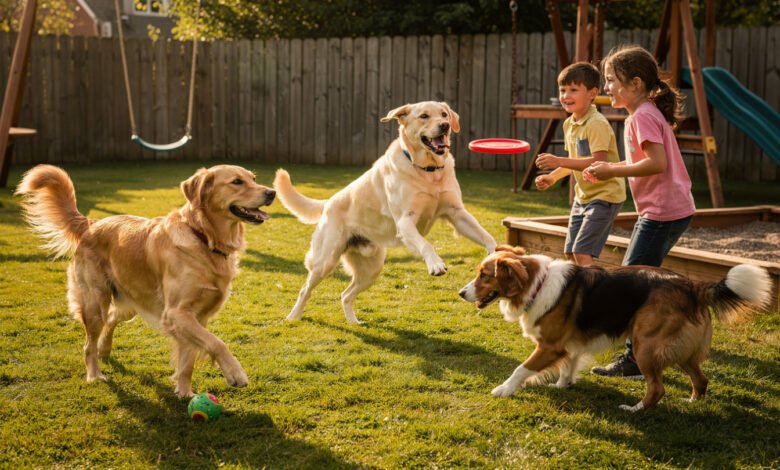
Best dog breeds for families are not one-size-fits-all. Every family is different — different house sizes, different schedules, different kids with different energy levels — and the dog you bring home needs to fit into that reality, not the other way around.
That said, some breeds consistently rise to the top when it comes to living with children. They tend to be patient, trainable, gentle under pressure, and social enough to enjoy the beautiful chaos that comes with family life. A dog that works beautifully for a couple in a studio apartment may be a nightmare in a home with three kids under eight.
This guide is built around what actually matters when choosing a family-friendly dog: temperament, energy level, trainability, size, and how a dog behaves around children of different ages. We have done the research, studied what veterinarians and breed experts recommend, and broken it all down in a way that makes the decision easier — not harder.
Whether you are looking for a gentle giant for your toddler, an active adventure partner for your teenagers, or a calm lap dog for a quieter household, there is a breed here for you. By the end, you will know exactly what to look for and which breeds are worth serious consideration.
What Makes a Dog Good for Families?
Before jumping into specific breeds, it is worth understanding what traits actually matter. Not every cute dog is a good fit for kids, and not every big dog is dangerous. Here are the core qualities that child-friendly dog breeds tend to share.
Temperament and Patience
The single most important quality in a family dog is a stable, predictable temperament. Kids are loud, unpredictable, and occasionally rough — even when they do not mean to be. A good family dog needs to handle that without snapping or becoming anxious.
Patient breeds that score high on child tolerance include Labrador Retrievers, Golden Retrievers, and Bernese Mountain Dogs. These dogs tend to roll with the chaos rather than react to it.
Trainability
A dog that learns quickly is a dog that fits into family life more smoothly. Highly trainable breeds respond well to consistent commands, pick up household rules faster, and are easier to manage around small children. Intelligence and eagerness to please are both part of this.
Breeds like Poodles, Border Collies, and Golden Retrievers consistently rank among the most trainable. Keep in mind, though, that high intelligence sometimes means a bored dog needs more stimulation — or it will find its own entertainment, which is rarely what you want.
Energy Level
Your family’s activity level should match your dog’s energy needs. An active family that hikes and spends time outdoors will thrive with a high-energy breed like an Irish Setter or Vizsla. A quieter household may do better with a Cavalier King Charles Spaniel or a Bulldog.


Matching energy levels prevents frustration on both sides.
Size
Size affects how a dog interacts with children. Very small dogs can be injured by enthusiastic toddlers, while very large dogs can accidentally knock them over. Medium to large breeds often hit a sweet spot — sturdy enough to handle rough play, but not so large that they are unmanageable.
Sociability
The best family dogs want to be near their people. Breeds that bond with the entire family — not just one person — tend to thrive in busy households. They are friendly with children, comfortable around strangers, and generally happy to be included in whatever is happening.
Best Dog Breeds for Families: The Top 15
1. Labrador Retriever
The Labrador Retriever is arguably the gold standard of family dogs. According to data compiled by Banfield Pet Hospital, Labs earned a child-tolerance score of 94 out of 100 across more than 127,000 owner reviews — the highest of any breed over 50 pounds. They also hold the lowest bite risk in their size category.
Labs are affectionate, playful, and patient. They love learning new things, which makes training relatively straightforward. They come in three colors — black, chocolate, and yellow — and two general energy types. English Labs tend to be slightly calmer, while American Labs run a little hotter. Both bond deeply with children and families.
The main things to know: Labs need real exercise. A bored Lab is a destructive Lab. They also shed quite a bit and love water, so expect muddy paws and wet towels after outdoor time.
- Size: 55–80 lbs
- Energy level: High
- Best for: Active families, families with toddlers, first-time dog owners
2. Golden Retriever
The Golden Retriever consistently sits at or near the top of every credible family dog list, and for good reason. They are gentle, patient, intelligent, and built for warmth. Golden Retrievers are tolerant enough for toddlers and playful enough for teenagers.
What sets Goldens apart is their eagerness to please. They want to make their owners happy, which makes training them a genuinely enjoyable experience. They are also socially generous — good with strangers, other dogs, and children of all ages.
On the practical side, they require regular grooming and daily exercise. They are prone to hip dysplasia and certain cancers, so health screening from a reputable breeder matters. Life expectancy runs around 10–12 years.
- Size: 55–75 lbs
- Energy level: High
- Best for: Families with young children, suburban homes with yards
3. Beagle
The Beagle is a compact, cheerful, and curious dog that thrives in family environments — as long as you can keep up with them. They are high-energy dogs driven by scent, which means they need a securely fenced yard and supervision on walks.
Beagles are merry and loyal, to borrow the AKC’s description. They do not do well when left alone for long stretches, so they are best suited for families who are home often. They also have a distinctive baying bark, which is worth knowing before you move into a townhouse with thin walls.
On the upside, their short coat is low-maintenance, their size is manageable, and they are naturally social with both children and other dogs.
- Size: 20–30 lbs
- Energy level: High
- Best for: Active families, homes with yards, families with other pets
4. Bulldog (English Bulldog)
If your family is more Netflix than hiking trail, the Bulldog might be the breed for you. English Bulldogs are famously low-energy and deeply affectionate. They prefer short walks over long runs and are genuinely happy lounging around with the kids.
Bulldogs are gentle and patient with children, respond reasonably well to training, and adapt to most living situations — including apartments. They are one of the better choices for calmer, less active households.
The trade-off is health. Bulldogs are prone to breathing issues because of their flat faces, and they can overheat quickly. Veterinary costs can run higher than average. They are also significant droolers, which is either charming or alarming depending on your personality.
- Size: 40–50 lbs
- Energy level: Low
- Best for: Quieter families, apartment dwellers, families with older kids
5. Poodle (Standard)
The Standard Poodle often gets underestimated because of its reputation as a show dog, but it is actually one of the smartest, most versatile, and most family-friendly breeds you can find. Standard Poodles are athletic, trainable, and deeply people-oriented.
They are also one of the better options for families with allergies. Poodles have curly coats that shed very little, which reduces dander significantly. No dog is fully hypoallergenic, but Poodles come close enough to make a meaningful difference for mild allergy sufferers.
Standard Poodles are excellent with children — playful, patient, and gentle. They need regular grooming and mental stimulation, but they reward that investment with loyalty and adaptability.
- Size: 40–70 lbs
- Energy level: Medium-High
- Best for: Families with allergies, active families, experienced dog owners
6. Cavalier King Charles Spaniel
The Cavalier King Charles Spaniel is one of the most adaptable breeds on this list. They are equally at home in an active household or a quieter one, which makes them a reliable choice for a wide range of families. They are affectionate, gentle, and easy to train thanks to their natural desire to please.
Cavaliers are especially good with younger children because of their calm, patient temperament. They do not require a huge amount of exercise and are one of the better choices for smaller homes or apartments.
The main health concern with Cavaliers is heart disease, which affects the breed at relatively high rates. Buying from a breeder who screens for cardiac conditions is essential.
- Size: 12–18 lbs
- Energy level: Low-Medium
- Best for: Quieter families, apartment dwellers, families with toddlers
7. Boxer
The Boxer is a high-energy, playful, and fiercely loyal breed that forms deep bonds with family members, including children. They are natural protectors without being aggressive, and they bring a genuine enthusiasm to family life that is hard not to love.
Boxers are highly active and need plenty of exercise. They thrive in homes where they can run, play, and be part of everything. They can be stubborn at times, so early and consistent training is important.
The breed has a short coat that requires minimal grooming, and they are naturally alert — good for families who want a dog that will also serve as a watchdog.
- Size: 50–70 lbs
- Energy level: High
- Best for: Active families, homes with yards, families with school-age children
8. Bernese Mountain Dog
The Bernese Mountain Dog is one of the most gentle giant breeds you will find. These dogs are calm, affectionate, and extraordinarily patient — especially with small children. They move slowly and deliberately, which helps around toddlers, and they have a natural warmth that makes them excellent family companions.
Berners are loyal to their entire family, not just one person. They are moderately trainable and generally easygoing indoors, though they do need regular outdoor time and do not do well in very hot climates.
The hard truth about Bernese Mountain Dogs is their lifespan — typically 7–10 years, which is shorter than many breeds. They are also prone to certain cancers and joint problems. The joy they bring is real; the grief when they go also tends to be significant.
- Size: 70–115 lbs
- Energy level: Medium
- Best for: Families with toddlers and young children, suburban or rural homes
9. Irish Setter
The Irish Setter is built for active families. These are energetic, playful, and socially enthusiastic dogs that love being included in outdoor activities — hiking, running, swimming, you name it. They are sweet-natured with children and form strong, affectionate bonds with their families.
Irish Setters need a lot of exercise. A poorly exercised Irish Setter will find ways to burn that energy indoors, usually in ways that are not ideal. But for families who genuinely love being active, this breed is a near-perfect match.
Their long, flowing red coat is beautiful and requires regular grooming. They are easy to train with positive reinforcement and respond well to consistent handling.
- Size: 55–70 lbs
- Energy level: High
- Best for: Very active families, homes with large yards, families who spend time outdoors
10. French Bulldog
The French Bulldog has become one of the most popular dog breeds in the United States, and for apartment-dwelling families especially, it is easy to see why. Frenchies are compact, affectionate, cheerful, and perfectly suited to smaller living spaces.
They are good with children, social with strangers, and easy to live with — though they do need some regular walks to stay healthy and avoid weight gain. Like all flat-faced breeds, they can overheat easily and may have breathing issues, so hot climates and intense physical activity are not ideal.
Frenchies are excellent for families who want a dog that is engaging and affectionate without the high-exercise demands of larger, more active breeds.
- Size: 20–28 lbs
- Energy level: Low-Medium
- Best for: Apartment living, less active families, urban environments
11. Vizsla
The Vizsla is sometimes called a “velcro dog” because it wants to be near its family at all times. These Hungarian sporting dogs are athletic, affectionate, and naturally gentle with children. They bond closely with their families and do not do well when left alone for long periods.
Vizslas need significant daily exercise — this is not a breed for families who are not genuinely active. But for households that hike, run, or spend time outdoors regularly, a Vizsla is a deeply rewarding companion.
Their short coat requires almost no grooming, which is a genuine practical bonus.
- Size: 44–60 lbs
- Energy level: Very High
- Best for: Very active families, athletic households, families with older children
12. Newfoundland
The Newfoundland is a massive, gentle, and extraordinarily patient dog that has long been associated with children. They are sometimes called “nanny dogs” because of their natural protectiveness and patience around kids. They are calm, loving, and deeply loyal.
Newfoundlands drool. A lot. They also shed significantly and require regular grooming. They need space — both physically and financially, since large dogs cost more to feed and treat medically. But their temperament with children is almost unparalleled.
- Size: 100–150 lbs
- Energy level: Medium
- Best for: Families with space, families with young children, rural or suburban homes
13. Collie
Collies — the breed made famous by Lassie — are intelligent, gentle, and naturally protective of children. They are highly trainable, loyal to their families, and sensitive to the moods and needs of the people around them.
Collies are moderately active and do well in suburban or rural environments. They need regular grooming because of their thick double coats. Their herding instincts can sometimes show up around young children, so early training is helpful.
- Size: 50–75 lbs
- Energy level: Medium-High
- Best for: Families with children, suburban or rural homes
14. Staffordshire Bull Terrier
The Staffordshire Bull Terrier often gets an unfair reputation, but with proper socialization and training, Staffies are affectionate, loyal, and remarkably gentle with children. They are sometimes nicknamed “the nanny dog” in the UK, where they have long been considered excellent family companions.
Staffies are muscular and sturdy, which actually makes them a good fit around energetic children. They are playful and form deep bonds with their families. Early socialization with other animals is important.
- Size: 24–38 lbs
- Energy level: High
- Best for: Experienced dog owners, families with older children
15. Mixed Breeds and Rescue Dogs
No list of best family dogs would be complete without mentioning mixed breeds. Shelter dogs — especially adults with known temperaments — can be outstanding family companions. In fact, adult rescue dogs often make the transition into family life more smoothly than puppies because their personality is already established.
Rescue organizations can help match your family with a dog whose temperament, energy level, and history align with your household. Many family-friendly purebred mixes — Goldendoodles, Labradoodles, and others — also end up in shelters.
The American Kennel Club’s breed selection tool is a helpful resource for narrowing down which purebred traits fit your lifestyle. For rescue options, Petfinder lists thousands of adoptable dogs sorted by breed, size, and location.
How to Choose the Right Dog Breed for Your Family
Knowing the top breeds is only part of the decision. Here is how to think through the rest of it.
Consider Your Children’s Ages
- Toddlers and babies need calm, patient dogs that can handle unpredictable behavior. Golden Retrievers, Cavalier King Charles Spaniels, and Bernese Mountain Dogs are strong choices.
- School-age children can handle more energetic breeds and often enjoy the playful dynamic that comes with a Beagle, Boxer, or Lab.
- Teenagers tend to do well with higher-energy breeds like Vizslas or Irish Setters, especially if they are involved in the dog’s daily care and exercise.
Match Your Lifestyle
Be honest about how active your family actually is — not how active you plan to be. If your family spends most evenings at home, a French Bulldog or Cavalier will fit far better than a Border Collie or Vizsla.
Think About Space
Large breeds need room to move. A Newfoundland or Bernese Mountain Dog in a small apartment is a recipe for stress — for everyone. Smaller, calmer breeds adapt much better to limited space.
Plan for the Long Term
Dogs live 10–15 years on average. Think about what your family will look like in five or ten years. The toddler who needs a calm, patient dog today will be a teenager who might love an energetic companion by the time that dog hits middle age.
Budget for the Real Costs
Food, veterinary care, grooming, training, and boarding all add up. Larger breeds cost more across the board. Breeds prone to health problems — like Bulldogs, Cavaliers, and Bernese Mountain Dogs — can have higher vet bills than healthier breeds. Factor this into your decision honestly.
Common Mistakes Families Make When Choosing a Dog
- Choosing based on looks alone. An adorable dog that does not match your energy level or lifestyle will create stress for everyone.
- Underestimating the time commitment. Dogs need daily exercise, consistent training, and regular human interaction. Puppies especially are a full-time job in the early months.
- Skipping training. Every family-friendly dog breed benefits from consistent training. Skipping it leads to behavioral problems that are much harder to fix later.
- Not involving kids in the process. Children who feel ownership over the decision are more likely to treat the dog with care and respect.
- Ignoring health screening. Reputable breeders test for genetic conditions. Skipping this step can lead to expensive, heartbreaking health problems down the road.
Conclusion
Best dog breeds for families come in all sizes and energy levels, but the common thread is temperament — a stable, patient, and social dog makes family life richer rather than more stressful. Labrador Retrievers and Golden Retrievers consistently lead the pack for good reason, but breeds like the Cavalier King Charles Spaniel, Bernese Mountain Dog, Boxer, and French Bulldog offer compelling options depending on your home, schedule, and the ages of your children. The key is to match the dog’s energy, size, and personality to your actual lifestyle — not your ideal one. Do the research, talk to breeders or rescue organizations, and involve your kids in the process. A well-matched dog becomes one of the most meaningful parts of a family’s life, and the decision is worth taking seriously.