How to Create a Life Vision Board
Make a life vision board that keeps you focused. This step-by-step guide covers goals, images, layout, and daily habits that turn plans into progress.
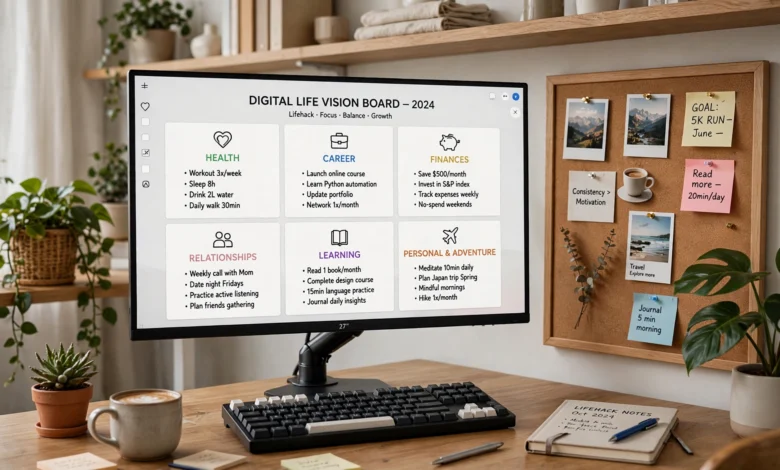
A life vision board is one of the simplest tools you can use to get clear on what you want, and one of the most misunderstood. Some people treat it like a wish list glued to cardboard. Others dismiss it as wishful thinking. The truth sits somewhere in the middle, and that middle ground is where a vision board actually becomes useful.
Here is the honest version. A board will not hand you a promotion, a healthier body, or a calmer mind. What it can do is keep your priorities in front of your eyes on the busy days when you would otherwise forget them. It turns vague hopes into something you can see, name, and act on. That shift from “someday” to “this is what I am working toward” matters more than most people expect.
If you have tried vision boarding before and felt nothing happened, the problem was probably the process, not the idea. Most boards fail because they are built around pretty pictures instead of real goal setting. They lack focus, they never get looked at again, and nothing on them connects to a weekly action.
This guide walks you through how to create a life vision board that works. You will see how to reflect on what you want across different areas of life, choose images and words that carry real meaning, lay everything out, and build a short daily habit around it. Whether you prefer scissors and glue or a digital vision board, the steps are the same.
What Is a Life Vision Board?
A life vision board is a visual collection of images, words, and short statements that represent the life you want to build. Unlike a board focused on one goal, such as a dream home or a fitness target, a life board covers several areas at once: health, career, money, relationships, personal growth, and fun.
Think of it as a one-page summary of your priorities. When you glance at it, you should be able to tell in a few seconds what matters to you this year and why.
Life Vision Board vs. Goal Board
A goal board usually tracks specific, measurable targets, like “save $5,000” or “run a half marathon.” A life vision board zooms out. It captures how you want your life to feel and look, then links that bigger picture to a few concrete goals. The best boards blend both: the emotion that pulls you forward and the targets that tell you whether you are moving.
Why a Vision Board Works (and When It Does Not)
A vision board works because it keeps your goals visible. Out of sight really does mean out of mind, especially when work, family, and screens compete for your attention all day.
The Research on Writing Down Goals
Psychology professor Gail Matthews at Dominican University of California ran a study on goal achievement with 267 participants. She found that people who wrote their goals down, committed to specific actions, and shared progress with a friend achieved noticeably more than those who only thought about their goals. You can read a summary in this article on the three things that make goals a reality. A vision board is a visual extension of that same principle: you are getting your goals out of your head and into the world.
Why Pretty Pictures Alone Are Not Enough
Here is the catch. Research by NYU psychologist Gabriele Oettingen suggests that positive fantasies on their own can make us feel like we have already arrived, which drains the energy we need to act. Her answer is a method called WOOP (Wish, Outcome, Obstacle, Plan), which pairs a positive vision with a clear look at what stands in the way. Her interview on NPR about mental contrasting and the WOOP method is worth your time.

The lesson for your board is simple. Use it to inspire you, but tie every image to a real next step. That is the difference between a decoration and a working goal setting tool.
What You Need to Make a Vision Board
You do not need anything fancy. The materials matter far less than the thinking you put in before you start cutting.
Supplies for a Physical Vision Board
- A base: corkboard, poster board, foam board, or a large sheet of cardstock. Corkboard is great if you want to swap items later.
- Images: old magazines, printed photos, postcards, brochures, or your own sketches.
- Words: cut-out headlines, printed quotes, or handwritten notes.
- Tools: scissors, glue stick, pins, washi tape, and markers.
- A notebook: for the reflection work in Step 1. Do not skip this.
Tools for a Digital Vision Board
A digital vision board is handy if you spend most of your day on a phone or laptop. You can set it as your wallpaper and see it dozens of times a day.
- Canva offers free templates and a large image library.
- Pinterest is good for collecting ideas, though a private board works better than a public one.
- PowerPoint, Keynote, or Google Slides let you build a simple collage on one slide.
- Your phone’s photo app can work too: make an album and pin it to your home screen.
Physical or Digital: Which Should You Choose?
Pick the one you will actually look at. A physical board has a tactile, hands-on quality that many people find motivating, and it lives in your home where you cannot ignore it. A digital board is easier to update and goes everywhere with you. Plenty of people make both: a physical board for the bedroom wall and a phone wallpaper version for daily reminders.
How to Create a Life Vision Board in 7 Steps
This is the part most guides rush through. Take your time here, because the quality of your board depends on the quality of your thinking.
Step 1: Reflect Before You Collect
Before you open a single magazine, sit down with your notebook for 30 to 60 minutes. Ask yourself:
- What does a good ordinary day look like for me a year from now?
- What do I want more of? What do I want less of?
- Which parts of my life feel neglected right now?
- What would I regret not trying in the next few years?
- How do I want to feel most of the time: calm, energized, secure, free?
Write freely. Do not edit yourself. The goal is to find the themes that keep showing up, because those are your real priorities.
Step 2: Choose Your Life Areas
A life vision board works best when it covers a balanced set of areas. Pick four to seven from this list, or create your own:
- Health and fitness
- Career and work
- Money and financial security
- Relationships and family
- Personal growth and learning
- Home and environment
- Fun, travel, and creativity
- Spirituality or inner peace
Fewer areas mean more focus. If everything is on the board, nothing stands out.
Step 3: Set Clear Intentions and Goals for Each Area
For each area, write one sentence describing the vision and one or two concrete goals beneath it. For example:
- Vision: “I feel strong and have energy for my kids after work.”
- Goals: walk 8,000 steps a day; cook at home five nights a week.
This is where goal setting meets visualization. The vision gives you the why. The goals give you something you can track.
Step 4: Gather Images and Words That Feel Personal
Now you can start collecting. Look for images that create a feeling in you, not just ones that look nice. A photo of a quiet kitchen table might represent peace at home better than a picture of a mansion.
Some tips for picking visuals:
- Use your own photos where you can. They carry more meaning.
- Mix literal and symbolic images. A passport stamp for travel works, but so does a picture of an open road.
- Add positive affirmations in the present tense, such as “I handle money with confidence.”
- Include your actual numbers and dates where they help.
Step 5: Design Your Layout
Lay everything out before you glue anything down. Common vision board layout options include:
- Grid: one section per life area. Clean and easy to scan.
- Center focus: your main word or theme for the year in the middle, with life areas around it.
- Freeform collage: more creative, but keep related items grouped so it does not become noise.
Leave a little white space. A crowded board is harder to read and easier to ignore.
Step 6: Add Your “Why” and Your Obstacles
This step separates a working board from a decorative one. Next to each area, add a small note with two things: why this matters to you, and the most likely obstacle you will hit. Then write a simple if-then plan, such as “If I feel too tired to cook, I will make the 15-minute backup meal.” This borrows directly from the WOOP approach and makes your board far more practical.
Step 7: Place It Where You Will See It Every Day
The best spot is somewhere you pass daily but do not ignore, like beside your mirror, over your desk, or on the inside of your closet door. For a digital vision board, set it as your phone lock screen or computer wallpaper. If you keep it private, a closet door or a notebook cover works well.
Life Vision Board Ideas for Every Area of Life
If you feel stuck, these vision board ideas can help you fill each section with something meaningful.
| Life area | Image ideas | Sample affirmation or goal |
|---|---|---|
| Health | Fresh meals, a trail you want to hike, a good night’s sleep | “I move my body every day.” |
| Career | A workspace you love, a certificate, a title you are aiming for | “I finish my certification by June.” |
| Money | A savings jar, a paid-off statement, a calm budget meeting | “I keep three months of expenses saved.” |
| Relationships | Family dinners, a weekend with friends, a date night | “I call one friend every week.” |
| Growth | Books, a course, a skill like a new language | “I read 12 books this year.” |
| Fun and travel | A destination, a hobby, a concert | “I take one real vacation this year.” |
Vision Board Ideas for Specific Seasons of Life
- Students: focus on study habits, grades, a dream university, and balance.
- New parents: focus on rest, support systems, and small moments of joy.
- Career changers: focus on skills, networking, and the kind of work that energizes you.
- Couples: make a shared board for joint goals like a home, savings, or travel.
- Retirees: focus on health, purpose, community, and new adventures.
Picking a Word of the Year
Many people anchor their board with a single word, like “steady,” “brave,” or “simplify.” It acts as a filter for decisions. When an opportunity comes up, you can ask whether it fits your word. Put it in the center of your board in large letters.
Common Life Vision Board Mistakes to Avoid
Even a well-made life vision board can lose its power if you fall into these traps:
- Copying someone else’s dreams. Social media is full of luxury cars and beach villas. If they do not genuinely excite you, leave them off.
- Being too vague. “Be happy” is hard to act on. “Spend Sunday mornings outdoors” is not.
- Overcrowding the board. Forty goals compete with each other. Five to ten clear ones give you direction.
- Skipping the action plan. Images without next steps turn into daydreams.
- Making it once and forgetting it. A board you never look at is just wall art.
- Ignoring obstacles. Pretending challenges do not exist leaves you unprepared when they show up.
How to Use Your Vision Board Every Day
Creating the board is the fun part. Using it is where the results come from.
Build a Two-Minute Morning Habit
Each morning, look at your board for one or two minutes. Pick one item and ask: “What is one small thing I can do today that moves this forward?” Then do it. Small actions repeated daily beat big bursts of motivation that fade by February.
Do a Weekly Check-In
Once a week, spend 10 minutes reviewing your progress. Which areas got attention? Which ones were ignored? Adjust your plan for the coming week. If you want extra motivation and accountability, share your weekly progress with a friend, which is exactly the habit that made the biggest difference in the Matthews study.
Update It as You Grow
Your life will change, and your board should too. Review it every three months. Remove goals you have reached and celebrate them. Replace items that no longer feel right. Some people keep finished pieces in a “done” envelope taped to the back, which is a great reminder of progress on tough days.
Pair It with a Journal
A vision board shows the destination. A journal tracks the journey. Writing a few lines each night about what you did, what got in the way, and what you learned turns your board into a living personal development system rather than a one-time craft project.
Conclusion
Learning how to create a life vision board is less about crafting skills and more about honest reflection and steady follow-through. Start by thinking through what you want across a handful of life areas, turn each vision into one or two clear goals, and choose images and words that genuinely move you. Lay them out with room to breathe, add your reasons and likely obstacles, and place the board where you will see it every day.
Then give it two minutes each morning, a short weekly check-in, and a fresh update every few months. Done this way, your life vision board stops being a pretty collage and becomes a practical daily reminder of the life you are building, one small action at a time.