How to Stop Scrolling and Start Living
Stop scrolling and start living with 9 practical habits that cut screen time, calm your mind, and help you spend your hours on what truly matters.
Stop scrolling for a second and think about the last time you picked up your phone. Did you mean to? Most of us don’t. We grab it while the kettle boils, in the elevator, at red lights, and in bed when we should be asleep. Ten minutes turns into forty, and we come out the other side feeling tired, a little anxious, and unsure where the time went.
You’re not weak for doing this. Social media apps are built by some of the smartest engineers in the world, and their job is to keep your thumb moving. Infinite feeds, autoplay, red notification badges, and unpredictable rewards all tap into the same parts of the brain that respond to slot machines. Fighting that with willpower alone is like trying to hold back a river with your hands.
The good news is that you don’t need to throw your phone into the ocean. You need a better system and a life that pulls you in more than a feed does. That second part is what most advice skips.
In this guide, you’ll see why mindless scrolling is so hard to break, the signs it’s costing you more than you think, and nine practical ways to stop scrolling and start living. Some are quick settings you can change today. Others are bigger shifts in how you spend your time and attention. Pick a few, try them for a week, and notice how much more of your day feels like yours.
Why It’s So Hard to Stop Scrolling
Before you can stop scrolling, it helps to understand what keeps you hooked. Once you see the mechanics, the habit stops feeling like a personal failing and starts looking like a problem you can solve.
The Dopamine Loop
Every time you refresh a feed, you don’t know what you’ll get. Maybe a funny video, maybe a message from a friend, maybe nothing. That uncertainty is the hook. Your brain releases dopamine in anticipation of a possible reward, not the reward itself. So the act of searching becomes the thing you crave. This is called variable reward, and it’s the same principle behind gambling machines.
Infinite Feeds Remove Stopping Points
Newspapers end. TV episodes end. Books have chapters. Feeds don’t. Without a natural stopping point, your brain never gets the signal that you’re done. You keep going until something outside interrupts you, like a phone call or a dead battery.
Scrolling Is an Escape Hatch
A lot of phone addiction isn’t really about the phone. It’s about avoiding something: boredom, a hard task, loneliness, stress, or an uncomfortable feeling. The phone gives instant relief. The problem is that the relief fades fast and leaves the original feeling untouched, often worse.
Doomscrolling and the Negativity Bias
Humans are wired to pay extra attention to threats. That’s why bad news grabs us more than good news. Doomscrolling happens when we keep consuming upsetting content because part of the brain thinks staying informed will keep us safe. According to the Cleveland Clinic’s guide to doomscrolling, this habit can keep the body’s stress hormone cortisol elevated, which over time affects both mental and physical health.
Signs You Need to Stop Scrolling Now
Not all phone use is a problem. Calling your mom, reading a good article, or learning a skill on YouTube can all be time well spent. The issue is the automatic, empty kind of use that crowds out everything else. Here are signs it’s time to make a change:

- You reach for your phone without deciding to. Your hand gets there before your brain does, especially in quiet moments.
- You feel worse after scrolling, not better. Anxious, envious, drained, or vaguely irritated are common after-effects.
- Your sleep is suffering. You scroll past the time you planned to sleep, or you check your phone the moment you wake up.
- You can’t focus on one thing for long. Reading a book or watching a full movie without checking your phone feels hard.
- Your screen time report surprises you. Most people underestimate their daily use by an hour or more.
- You’re physically present but mentally elsewhere. Friends or family have mentioned you’re always on your phone.
- Hobbies and goals keep getting pushed to “someday.” You say you don’t have time, but the hours are going somewhere.
If three or more of these sound familiar, your phone habits are likely shaping your days more than you’d like. That’s not a reason for guilt. It’s useful information, and it’s where change starts.
9 Powerful Ways to Stop Scrolling and Start Living
These strategies work best in combination. The first few make scrolling harder. The later ones make real life more appealing. You need both.
1. Check Your Real Numbers First
Open Screen Time on iPhone or Digital Wellbeing on Android and look at your last seven days. Note three things: your daily average, the apps eating the most time, and how many times you pick up your phone. Write them down. This isn’t about shame. It’s a baseline, and seeing the numbers drop later is one of the best motivators you’ll get.
2. Turn Off Almost All Notifications
Every buzz is an invitation to open an app, and once you’re in, the feed takes over. Go through your settings and turn off notifications for everything except:
- Calls and messages from real people
- Calendar reminders
- Apps you truly need for work or safety
Social media likes, news alerts, shopping deals, and game reminders can all go. You’ll still see them when you choose to open the app. The difference is that you decide when.
3. Add Friction to Your Worst Apps
The easier something is, the more you do it. So make scrolling a little harder:
- Move social apps off your home screen and into a folder on the last page.
- Log out after each use so you have to type your password.
- Set daily screen time limits for your top two apps.
- Try a grayscale display. Colorless feeds are surprisingly boring.
- Delete one app from your phone and only use it on a computer.
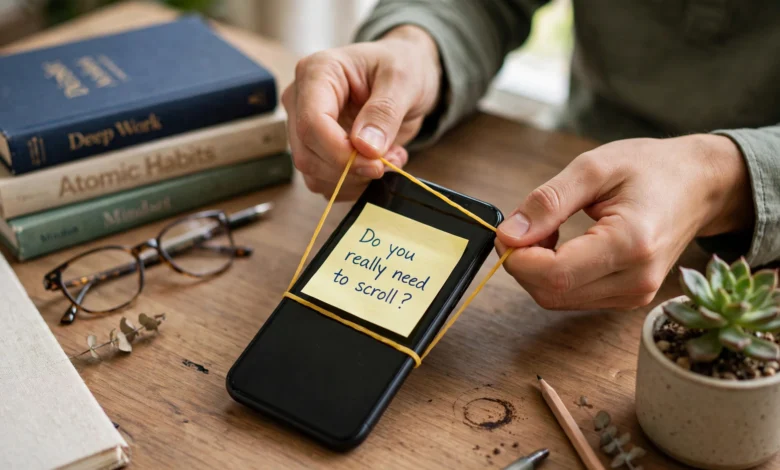
A few seconds of friction is often enough to break the autopilot and ask yourself, “Do I actually want to do this?”
4. Create Phone-Free Zones and Times
Rules about places and times are easier to follow than vague goals like “use my phone less.” Some that work well:
- No phone in the bedroom. Buy a cheap alarm clock and charge your phone in the kitchen.
- No phone for the first 30 minutes of the day. Make coffee, stretch, or step outside first.
- No phone at meals. Put it face down in another room, not on the table.
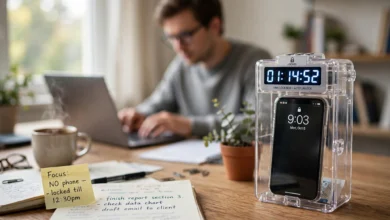
- No phone during focused work blocks. Use Focus mode or a timer app.
Start with one zone. Once it feels normal, add another.
5. Name the Feeling Behind the Urge
When you feel the pull to open an app, pause for three seconds and ask: what am I looking for right now? Bored, lonely, avoiding work, anxious, tired? Naming the feeling weakens the urge. Then you can respond to what you actually need. If you’re tired, rest. If you’re lonely, text a friend directly instead of watching strangers’ lives. If you’re avoiding a task, do five minutes of it.
6. Curate Your Feed Ruthlessly
When you do scroll, make it count. Unfollow or mute accounts that leave you feeling envious, angry, or inadequate. Follow people who teach you something, make you laugh, or inspire you to do things offline. The Calm guide on breaking the doomscrolling habit suggests setting short, time-bound check-ins for news instead of checking all day, which keeps you informed without the constant stress.
7. Replace Scrolling With Something You Enjoy
This is the step most people skip, and it’s why they relapse. If you remove scrolling and leave a hole, the phone will fill it again. Have a list of easy alternatives ready for the moments you usually reach for your phone:
- Keep a book or e-reader within arm’s reach
- Go for a 10-minute walk without headphones
- Pick up a hands-on hobby like sketching, cooking, guitar, or gardening
- Call or meet a friend instead of reacting to their stories
- Do a short stretch or breathing routine
The best replacements are things that leave you feeling better afterward, not just distracted.
8. Try a Weekend Digital Detox
A short digital detox resets your sense of what normal feels like. Pick one weekend, or even one Sunday, and keep your phone off or in a drawer except for calls. Plan things to do in advance so you’re not just waiting out the clock. Most people find the first few hours restless and the rest of the day surprisingly calm. You’ll also notice which apps you actually missed and which ones you didn’t think about at all.
9. Build Intentional Phone Habits
The long-term goal isn’t zero phone use. It’s using your phone on purpose. Before you unlock it, have a reason: reply to Sam, check the bus time, pay the bill. When you finish that task, put it down. This simple habit, sometimes called intentional use, turns your phone back into a tool instead of a slot machine. Over time it becomes automatic, just like scrolling once was.
How to Start Living Once You Stop Scrolling
Cutting screen time frees up hours. What you do with them decides whether the change sticks. Here’s how to fill that space with things that matter.
Reconnect With People in Person
Social media gives the feeling of connection without much of the substance. A real conversation, even a short one, does more for your mood than an hour of likes. Make a habit of one in-person plan a week, whether it’s coffee, a walk, or dinner. Put the phone away while you’re together. People notice, and it makes the time feel different.
Rediscover Old Interests
Think back to what you loved doing before your phone took over your spare time. Drawing, playing sports, writing, building things, cooking for friends. Those interests are usually still there, waiting. Pick one and give it 20 minutes, three times a week. Progress in a real skill is far more satisfying than the quick hits a feed offers.
Get Outside More
Time in nature is one of the simplest ways to calm a busy mind. You don’t need a hiking trip. A walk around the block, sitting in a park, or watching the sunset counts. Leave your phone in your pocket, or better yet, at home.
Practice Being Bored
This sounds odd, but boredom is useful. It’s when your mind wanders, connects ideas, and comes up with plans. Constant scrolling kills that space. Try waiting in line or riding the bus without reaching for your phone. It’s uncomfortable at first, then strangely restful. This is a core part of mindful living.
What to Do When You Slip Back Into Old Habits
You will relapse. Everyone does. A stressful week, a breaking news story, or a new app can pull you back in. That’s normal, and it doesn’t erase your progress. Here’s how to handle it:
- Notice without judging. “I’ve been scrolling a lot this week” is more useful than “I have no self-control.”
- Look for the trigger. Was it stress, a schedule change, or a removed rule like the bedroom phone ban?
- Restart with one small step. Bring back a single habit, like no phone at meals, rather than everything at once.
- Review your screen time weekly. A quick Sunday check keeps you honest without obsessing.
If you feel that your social media addiction is tied to ongoing anxiety, low mood, or loneliness that doesn’t lift, talking to a therapist or doctor can help. Sometimes the phone is a symptom, and treating the root cause makes it much easier to stop scrolling for good.
Quick Daily Checklist to Stop Scrolling
Keep this short list somewhere visible for the first month:
- Phone charged outside the bedroom
- No phone for the first 30 minutes of the day
- Notifications off for non-essential apps
- One intentional reason before each unlock
- 20 minutes on a real hobby or person
- Screen time checked once, not obsessively
Conclusion
Learning to stop scrolling isn’t about hating technology or quitting social media forever. It’s about understanding why feeds are so hard to put down, spotting the signs that your phone habits are costing you sleep, focus, and relationships, and then making small changes that add up: checking your real numbers, cutting notifications, adding friction, setting phone-free zones, naming the feelings behind the urge, curating your feed, replacing scrolling with things you enjoy, trying a short digital detox, and using your phone with intention.
Most importantly, fill the time you win back with people, hobbies, and moments that make your life feel full, so the next time you stop scrolling, you have something better waiting for you.