What Is Augmented Reality and How Is It Used?
Discover what augmented reality is and how it's used today. Learn about AR technology, applications, benefits, and the future of augmented reality.
Augmented reality has transitioned from cool technology demo to practical tool millions of people use daily. If you’ve used a Snapchat filter, played Pokémon Go, or used furniture preview features while shopping online, you’ve experienced augmented reality technology.
But what is augmented reality exactly? Most people understand the basic concept—computer-generated content overlaid on the real world—but the actual technology encompasses multiple approaches and applications most people don’t recognize as augmented reality.
Unlike virtual reality, which creates entirely artificial environments, augmented reality blends digital elements with your physical surroundings. Your phone’s camera shows the real world, but augmented reality apps layer digital content on top. You see both simultaneously, with virtual elements appearing anchored to real locations.
The technology has evolved dramatically. Augmented reality capabilities that required specialized equipment five years ago now work on standard smartphones. The applications continue expanding into industries far beyond entertainment.
This comprehensive guide explains what is augmented reality, how it works technically, and the diverse ways people currently use it. We’ll examine augmented reality applications in business, education, healthcare, retail, and entertainment. We’ll discuss the hardware enabling augmented reality experiences, explain why some applications succeed while others fail, and explore what the technology might enable in coming years.
By the end, you’ll understand not just the technology but also why augmented reality matters and which applications represent genuine progress versus hype. You’ll see how augmented reality is gradually becoming indispensable to various industries while remaining complementary rather than revolutionary for general consumers.
The Fundamentals: What Is Augmented Reality?
Augmented reality is a technology that overlays digital content onto your view of the physical world. The key distinction from virtual reality is integration with reality rather than replacement of it.
How Augmented Reality Differs from Virtual Reality and Mixed Reality
These terms are often confused:
Virtual Reality (VR): Creates a completely artificial environment that replaces your view of the physical world. VR requires headsets that block your real vision entirely.
Augmented Reality (AR): Overlays digital content on your view of the real world. You see both the physical environment and digital elements simultaneously.


Mixed Reality (MR): A hybrid that allows digital objects to interact with the physical environment realistically. MR is more advanced than AR but harder to implement.
Augmented reality is the most accessible of these technologies because it doesn’t require expensive headsets. Your smartphone is sufficient for most augmented reality applications.
How Augmented Reality Actually Works
Augmented reality requires several components working together:
Vision Processing: The device’s camera captures video of the real world. Augmented reality software analyzes the video to understand the physical environment—surfaces, objects, depth, and lighting conditions. This analysis must happen in real time, which requires significant computational power.
Object Recognition: Augmented reality systems identify objects in the environment. A furniture AR app recognizes your living room’s walls and floor. A medical AR app recognizes anatomical structures. This recognition capability is what allows augmented reality to interact meaningfully with reality.
Depth Sensing: Understanding how far away objects are matters tremendously. Early augmented reality couldn’t estimate depth accurately, so virtual objects appeared to float in space awkwardly. Modern phones use LIDAR sensors or computational methods to judge depth, allowing augmented reality to place objects believably in space.
Rendering: The system combines the real camera video with computed 3D graphics. This rendering must happen at sufficient frame rates (30fps minimum) to look smooth. Slow rendering makes augmented reality feel broken and nauseating.
Pose Tracking: As you move your phone, augmented reality continuously updates what you should see. If you place a virtual object on your desk and walk around it, the virtual object should remain anchored to that desk location from every angle. This requires constant position and orientation tracking.
Current Augmented Reality Applications
Augmented reality is actively used across multiple industries:
Augmented Reality in Retail and E-Commerce
This represents the most commercially successful augmented reality application. Retailers let customers visualize products in their own spaces before buying:
- Furniture shopping – Preview how sofas or tables look in your living room
- Makeup – Try on colors virtually using augmented reality filters
- Eyeglasses – See how frames look on your face
- Paint colors – Visualize wall colors in your actual rooms
- Clothing – Visualize how garments fit your body
This augmented reality usage drives purchasing decisions and reduces return rates by letting customers know exactly what they’re buying.
Augmented Reality in Navigation
Pointing your phone’s camera at streets, augmented reality navigation apps overlay directional arrows on the real world, making navigation more intuitive than following a traditional map.
Augmented reality also helps navigate indoor spaces. Museums use augmented reality to provide guided tours with overlaid information.
Augmented Reality in Gaming and Entertainment
Pokémon Go popularized augmented reality gaming. Games using augmented reality place creatures, game elements, or experiences in real-world locations. Players use augmented reality to catch Pokémon in their neighborhoods, creating massive adoption of the technology.
Augmented reality filters on Snapchat and TikTok let people add effects to their images and videos. These applications introduced augmented reality to hundreds of millions of casual users who don’t think of themselves as using “technology.”
Augmented Reality in Education
Augmented reality makes learning more interactive and visual:
- Medical students use augmented reality to study anatomy with 3D models overlaid on diagrams
- Biology students visualize molecular structures in augmented reality
- History classes use augmented reality to reconstruct historical scenes
- Engineering students practice procedures using augmented reality simulations
This augmented reality approach helps visual and kinesthetic learners engage better with complex material.
Augmented Reality in Manufacturing and Maintenance
Technicians wearing augmented reality headsets see repair instructions overlaid on equipment they’re servicing. Expert technicians can see through augmented reality systems and guide distant technicians through complex repairs.
Augmented reality reduces repair time, decreases errors, and helps train new employees. Some manufacturers report 30-40% improvements in service efficiency using augmented reality.
Augmented Reality in Healthcare
Surgeons use augmented reality systems to visualize medical imaging data during procedures. Augmented reality overlays CT or MRI scans onto the patient, helping surgeons navigate complex anatomy more safely.
Augmented reality also helps in diagnostics, therapy, and patient education. This represents one of the highest-value augmented reality applications where accuracy and precision directly impact patient outcomes.
Augmented Reality in Real Estate
Real estate agents use augmented reality to help clients visualize properties:
- Virtual staging – Show how vacant rooms could look furnished
- Property visualization – Display properties that don’t exist yet (for new developments)
- Neighborhood information – Overlay school locations, crime statistics, and demographics
This augmented reality usage helps buyers make more confident decisions.
The Technology Enabling Augmented Reality
Several technological advances made augmented reality practical:
Smartphone Processing Power
Modern phones contain processors powerful enough to run augmented reality in real time. Processing requirements that needed desktop computers five years ago now happen on phones.
LIDAR and Time-of-Flight Sensors
These sensors measure distances to objects by detecting how long light takes to bounce back. This enables phones to understand 3D space without requiring complex algorithms. High-end phones and dedicated augmented reality devices include these sensors.
Computer Vision Advances
Deep learning and neural networks have revolutionized computer vision. Augmented reality systems can now recognize objects, estimate poses, and understand scenes far better than earlier methods.
Persistent Spatial Mapping
Modern augmented reality systems create and maintain maps of your environment, allowing digital content to persist in consistent locations. This is far more advanced than early augmented reality which couldn’t remember where objects were placed.
Why Some Augmented Reality Applications Succeed While Others Fail
Not all augmented reality applications succeed commercially:
Successful AR applications solve specific problems or provide clear value:
- Virtual furniture fitting addresses the fundamental problem of buying furniture without seeing it in your space
- Surgical augmented reality improves outcomes and reduces complications
- Educational augmented reality makes complex concepts concrete
Failed AR applications often force augmented reality into situations where it doesn’t add value:
- Many businesses tried augmented reality simply because it was trendy, not because it solved real problems
- Augmented reality that requires specialized hardware limits adoption
- Applications with poor user experience or unreliable performance get abandoned quickly
The pattern is clear: augmented reality succeeds when it makes something faster, easier, safer, or possible that wasn’t before. Augmented reality fails when it’s included just because it sounds cool.
Hardware for Augmented Reality
While smartphones remain the primary augmented reality platform, specialized hardware is emerging:
Augmented Reality Phones
Some phones are specifically designed for augmented reality. They include enhanced sensors and processors optimized for augmented reality applications.
Augmented Reality Glasses
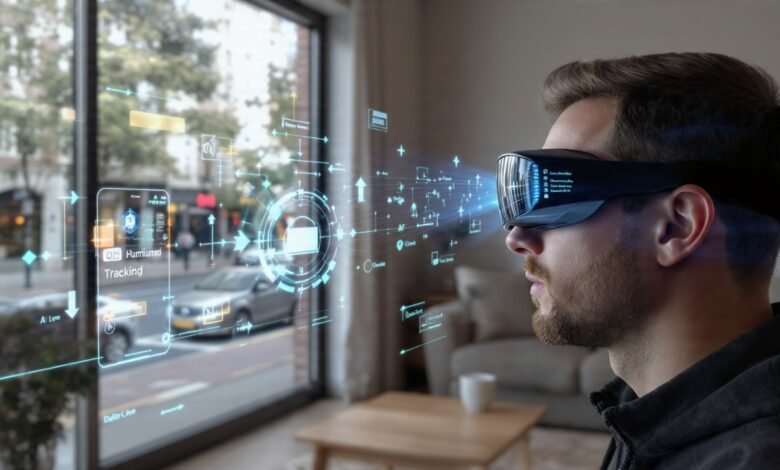
Microsoft HoloLens, Magic Leap, and similar devices provide hands-free augmented reality experiences. These glasses have displays directly in front of your eyes, leaving your hands free and providing more natural interaction.
Augmented reality glasses currently cost thousands of dollars and remain niche products. As technology improves and prices decline, they may become mainstream.
Augmented Reality Headsets
Dedicated augmented reality headsets like the Microsoft HoloLens 2 target professional applications. They offer superior performance compared to phone-based augmented reality but remain expensive.
Challenges and Limitations of Augmented Reality
Despite progress, augmented reality faces real challenges:
Computational Demands: Processing real-time video, recognizing objects, tracking position, and rendering graphics simultaneously demands significant processing power. Battery life suffers on phones running intensive augmented reality applications.
Occlusion Problems: Virtual objects should appear behind real objects when appropriate. Getting this right is computationally complex and still imperfect in many augmented reality systems.
Lighting Estimation: Virtual objects should appear lit by the same light sources as the real environment. Estimating lighting is challenging and errors make augmented reality look unconvincing.
Latency: Delay between your movement and what augmented reality displays causes discomfort. Achieving low-latency augmented reality requires powerful hardware.
Calibration: Many augmented reality experiences require manual calibration by the user. This friction reduces adoption.
The Future of Augmented Reality
Augmented reality is likely to develop in several directions:
Improved Hardware: Augmented reality glasses will become lighter, cheaper, and more capable, potentially replacing smartphones for many tasks.
Better Algorithms: Continued improvements in computer vision and AI will make augmented reality recognition and tracking more reliable.
Persistent Shared Experiences: Multiple people will participate in shared augmented reality experiences, seeing the same virtual content in the same physical location.
Integration with Daily Life: Augmented reality will become invisible—so integrated into devices and experiences that it’s not thought of as special technology.
Brain-Computer Interfaces: Distant future augmented reality might involve neural interfaces, eliminating the need for displays and hand-held devices.
Conclusion
Augmented reality is technology that overlays digital content onto your view of the physical world, using smartphone cameras and sensors to understand your environment and place virtual objects believably within it. From retail applications letting you visualize furniture in your home to surgical systems helping doctors navigate complex procedures, augmented reality is delivering real value across multiple industries. Unlike virtual reality, which replaces reality, augmented reality blends digital and physical seamlessly.
While challenges remain around computational demands, latency, and lighting, advances in smartphone processing power, computer vision, and sensor technology continue making augmented reality more capable and accessible. The technology succeeds when solving real problems—improving efficiency, enabling visualization, or making experiences possible—rather than simply being included for novelty. As augmented reality hardware improves and costs decline, expect increasing integration into everything from shopping to education to professional work.