How Facial Recognition Technology Works
Understand how facial recognition technology works. Learn about algorithms, accuracy rates, privacy concerns, and real-world applications in 2026.
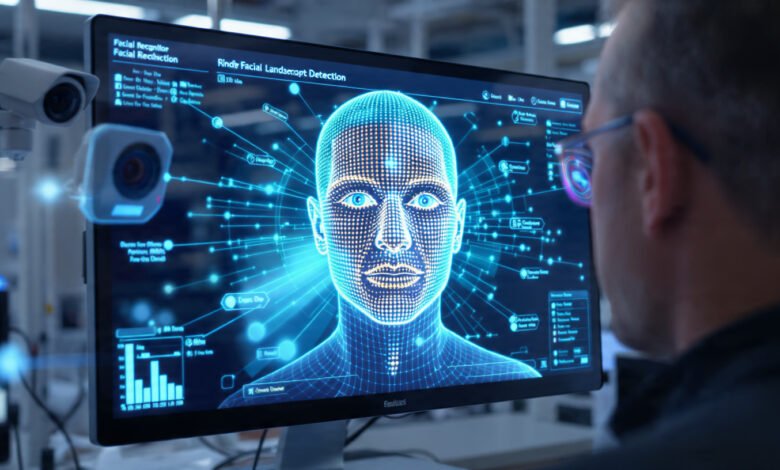
Facial recognition technology has moved from science fiction to everyday reality. You encounter it constantly—unlocking your smartphone with your face, airport security scanning passengers, social media platforms tagging friends in photos, and law enforcement using databases to identify suspects.
But how does how facial recognition works behind the scenes? Most people understand the basic concept—a computer matches your face to a database—but the actual process involves sophisticated mathematics, artificial intelligence, and hardware working in concert.
The technology has advanced remarkably fast. Systems that struggled with accuracy just five years ago now rival human recognition capabilities in many scenarios. Modern facial recognition algorithms can identify you from different angles, with or without glasses, and even with facial hair changes that would confuse older systems.
This growing capability raises important questions. Facial recognition technology offers genuine benefits for security and convenience, but it also creates surveillance possibilities that concern privacy advocates. Understanding how the technology actually works helps you evaluate both the genuine benefits and legitimate concerns.
This comprehensive guide explains how facial recognition technology detects faces, extracts unique identifying features, compares them against databases, and produces identification results. We’ll break down the science into understandable concepts, discuss why accuracy varies, and examine both the promising applications and valid privacy concerns surrounding this increasingly ubiquitous technology.
By the end, you’ll understand exactly what facial recognition technology can and cannot do, why it sometimes fails, and how it’s likely to develop in coming years.
The Basic Process: How Facial Recognition Works Step-by-Step
Facial recognition technology follows a consistent process, though implementation details vary between systems:
Step 1: Face Detection
Before recognizing a face, the system must first detect that a face exists in an image. Facial recognition systems use algorithms that scan images looking for characteristic patterns—two eyes, a nose, and a mouth arranged in a specific configuration.
Early face detection relied on simple rules. Modern systems use deep learning neural networks trained on millions of faces. These networks learned what faces look like across countless variations—different ages, ethnicities, lighting conditions, angles, and expressions.
When facial recognition technology scans an image, it identifies the location and boundaries of every face present. This detection step happens incredibly fast—fractions of a second for images, and in real-time for video.


Step 2: Alignment and Normalization
Faces don’t always appear in convenient front-facing positions. Facial recognition systems use mathematical transformations to standardize how faces appear in images. If you’re tilted 30 degrees to the side, the system rotates the image mathematically to correct the angle.
Normalization also adjusts for brightness differences. A face in dim lighting looks very different from the same person in bright sunlight. Facial recognition algorithms apply corrections so that lighting differences don’t prevent identification.
Step 3: Feature Extraction
This is where facial recognition technology becomes mathematically sophisticated. The system analyzes facial features—the distance between your eyes, the shape of your nose, your jawline proportions, cheekbone prominence, and dozens of other characteristics.
Modern facial recognition doesn’t store an image of your face. Instead, it creates a mathematical representation called a “faceprint” or “face embedding.” This is essentially a list of numbers that quantifies your unique facial characteristics. A faceprint might contain 128, 512, or even 10,000 numerical values depending on the system’s complexity.
This mathematical representation is crucial. Two images of the same person will produce slightly different numbers due to lighting, angle, and expression differences. But the overall patterns stay similar—like a fingerprint’s characteristic patterns remain consistent despite how you press your finger.
Step 4: Comparison and Matching
Once the system creates a faceprint, facial recognition technology compares it against stored faceprints in a database. The system doesn’t look for perfect matches—it calculates similarity scores.
If your faceprint differs from a stored version by less than a certain threshold, the system declares a match. Higher thresholds mean stricter matching (fewer false positives but more missed identifications). Lower thresholds mean easier matching (more false positives but better identification rates).
Step 5: Result and Confidence Score
Facial recognition systems return not just a match but a confidence score indicating how certain the system is about its identification. A 99.9% confidence score means the system is nearly certain. A 60% confidence score indicates weak matching.
The Technology Behind Feature Extraction
Understanding what makes facial recognition technology work requires understanding feature extraction methods:
Traditional Approach: Geometric Feature Analysis
Early facial recognition systems measured facial geometry—distances between specific points on the face. If point A to point B measured 2.5 inches on your face but 2.6 inches on another person’s, that difference helped distinguish you.
This approach worked reasonably well but struggled with difficult images, expressions, and variations in head position. It was also sensitive to measurement errors.
Modern Approach: Deep Learning Neural Networks
Contemporary facial recognition technology uses artificial neural networks trained on millions of face images. These networks learned to identify patterns human engineers never explicitly programmed.
The process works like this: show the network millions of face pairs—some of the same person, some of different people. The network gradually learns what facial characteristics matter for identification. Overtime, it develops an intuitive sense of facial similarity that exceeds human capabilities.
Facial recognition algorithms using deep learning handle variations—different ages, expressions, angles, and lighting—far better than geometric measurements. They work because they learned from realistic examples rather than relying on predefined rules.
Why Facial Recognition Technology Sometimes Fails
Facial recognition systems, despite improvements, still have failure modes:
Age Differences: Your face changes significantly over decades. A facial recognition system trained on photos from when you were 25 will struggle to identify you at 55. Experts debate whether this is a limitation or a feature—do we want to identify people across 30-year gaps?
Makeup and Facial Hair: Dramatic makeup or facial hair changes can confuse facial recognition technology. A woman wearing heavy makeup looks different from the same person makeup-free. However, modern systems handle modest variations better than older versions.
Poor Image Quality: Low-resolution images, extreme angles, and dark lighting create challenges for facial recognition. The technology needs adequate information to extract meaningful features.
Similar Faces: Identical twins and some similar-looking people create fundamental problems for facial recognition technology. The system cannot distinguish between people who look nearly identical, which is actually a limitation inherent to the concept rather than the technology.
Spoofing: Users can attempt to fool facial recognition systems with photographs, masks, or deepfakes. Modern systems include anti-spoofing measures (checking for blinking, blood flow indicators, or 3D depth), but sophisticated spoofing attempts can sometimes succeed.
Real-World Applications of Facial Recognition Technology
Facial recognition technology has legitimate practical applications:
Smartphone Security: Your iPhone or Android phone uses facial recognition to unlock without typing a password. This is more secure than fingerprints (harder to fake or use without consent) and more convenient than password entry.
Airport Security: Many airports use facial recognition technology to verify boarding passes, check identification, and screen for wanted individuals. This speeds security lines and improves accuracy compared to manual inspection.
Law Enforcement: Police use facial recognition databases to identify suspects from surveillance footage or photos. This speeds investigations and helps find missing persons. However, accuracy concerns led some cities to restrict usage.
Social Media and Photo Organization: Facebook and Google Photos use facial recognition to tag people in photos and organize photo libraries. Users can opt out, though some advocates believe this use raises privacy concerns regardless.
Banking and Finance: Financial institutions use facial recognition technology to verify identities during remote transactions, preventing fraud. This is generally more secure than relying on questions only the legitimate owner would answer.
Retail Analytics: Some retailers use facial recognition to track store traffic, measure advertising effectiveness, and identify frequent customers. This application draws the most privacy concerns, as customers often don’t realize they’re being identified.
Accuracy and Bias Concerns
Research shows facial recognition technology performs differently across demographic groups. Studies have found algorithms perform better on lighter-skinned faces than darker-skinned faces, and sometimes show gender bias.
This happens because:
- Training data imbalance – If most training images featured lighter-skinned faces, the algorithm learned to recognize those characteristics better
- Different facial proportions – Lighting and photography can interact differently with different skin tones
- Cultural representation – Facial hair styles, makeup, and expression patterns vary across cultures, and some are underrepresented in training data
Modern facial recognition systems increasingly address these issues through more diverse training data and bias testing. However, recognizing that facial recognition technology can have differential performance remains important.
Privacy and Surveillance Implications
Facial recognition technology creates surveillance possibilities that concern privacy advocates:
- Mass identification in public spaces enables tracking without consent
- Databases of millions of faces can be queried instantly
- Mistakes in facial recognition systems can wrongly implicate innocent people
- Law enforcement use raises concerns about targeted surveillance of specific groups
- Commercial use to track customers and behavior goes unnoticed by shoppers
Many jurisdictions are developing regulations. Some cities banned police use of facial recognition technology. Others require warrants or specific justification. The European Union restricts real-time facial recognition in public spaces.
The Future of Facial Recognition Technology
Facial recognition technology continues advancing. Future developments likely include:
- Improved accuracy through continued neural network development
- Multi-modal recognition combining facial recognition with gait recognition, voice patterns, and other biometrics
- Better privacy protection through on-device processing rather than cloud-based systems
- Stronger regulations establishing when and how facial recognition can be used
- Adversarial robustness making systems resistant to attempted manipulation
Conclusion
Facial recognition technology has evolved from laboratory curiosity to powerful tool with real applications and genuine concerns. The technology works by detecting faces, extracting unique mathematical features called faceprints, and comparing them against databases to identify individuals. Modern systems using deep learning neural networks rival human performance on many tasks, though they still struggle with age differences, poor image quality, and similar-looking faces.
While facial recognition technology offers legitimate security and convenience benefits, it also enables surveillance possibilities that raise valid privacy concerns. Understanding how facial recognition actually works—including its capabilities and limitations—helps people make informed decisions about acceptance or regulation of this increasingly prevalent technology.