Best Business Models for Beginners
Best business models for beginners: 7 proven, low-risk ways to start a profitable business in 2026, no big budget or experience needed.
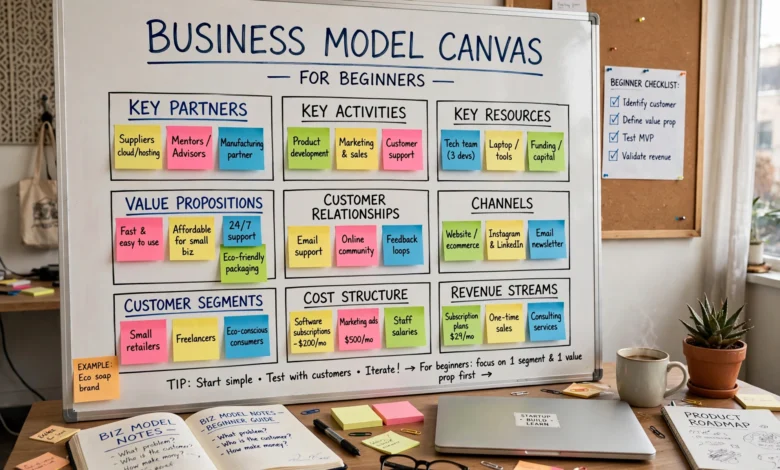
Best business models for beginners aren’t te ones you see hyped up on social media promising overnight riches. They’re the ones with low startup costs a short learning curve, and a clear path from “no customers” to “first sale.” If you’ve been sitting on the idea of starting something of your own but keep getting stuck on which business to actually build, you’re not alone. Most people don’t fail because they lack a good idea. They fail because they pick a business model that doesn’t match their budget, their time, or their skill set.
This guide breaks down the best business models for beginners in plain language, without the jargon or the “guru” energy. We’ll walk through service-based businesses, e-commerce, content and affiliate models, coaching, and a few others worth considering, along with the real pros, cons, and startup costs of each. We’ll also cover how to actually choose between them, what mistakes trip up most new entrepreneurs, and how to validate an idea before you spend a dollar on it.
Whether you want a side hustle that pays your car bill or a full business you can eventually quit your job for, the goal here is the same: match the model to your situation instead of chasing whatever’s trending this month. By the end, you should have a shortlist of two or three business models for beginners that actually fit your life, plus a realistic plan for getting started this week, not “someday.”
What Makes a Business Model Beginner-Friendly?
Before jumping into specific ideas, it helps to know what separates a genuinely beginner-friendly business model from one that just looks easy on YouTube. Not every business that seems simple actually is, and some of the most-hyped online business models require more capital, technical skill, or patience than most first-timers expect.
A good starting business model usually has these traits:
- Low startup costs — You can launch with a few hundred dollars, not tens of thousands.
- Fast feedback loop — You find out quickly whether people want what you’re offering.
- Minimal technical barrier — You don’t need to code, manufacture, or hire a team to get going.
- Flexible time commitment — You can start part-time while keeping your day job.
- Room to grow — The model can scale once you’ve proven it works, instead of hitting a ceiling right away.
If a business idea is missing more than one or two of these, it’s probably not the right first business, even if it looks profitable on paper. With that framework in mind, here are the business models that consistently work best for people just starting out.
1. Freelancing and Service-Based Businesses
Freelancing is arguably the single best business model for beginners because it removes almost every barrier that trips people up: no inventory, no product development, no upfront cash outlay. You’re simply selling a skill you already have, whether that’s writing, graphic design, bookkeeping, web development, video editing, or virtual assistance.
Why It Works for Beginners
You get paid for hours or projects almost immediately, which means income can start flowing within days instead of months. There’s also no manufacturing or shipping to manage, and you can test different niches or services without much financial risk.
How to Get Started
- Pick one specific service for one specific type of client instead of trying to be a generalist. “I write email newsletters for SaaS companies” beats “I do all kinds of writing.”
- Build a simple portfolio, even if it’s just two or three sample projects you create yourself.
- Reach out directly to 20 to 30 potential clients instead of waiting for people to find you.
- Use freelance platforms like Upwork or Fiverr to get your first few reviews, then move toward direct outreach for better rates.
The Catch
Freelancing trades time for money, which caps how much you can earn without raising your rates or hiring help. It’s an excellent starting point, but most freelancers eventually look to package their expertise into productized services, courses, or agencies to break that ceiling.
2. E-Commerce and Dropshipping
E-commerce covers a lot of ground, from selling handmade goods on Etsy to running a full online store with dropshipping suppliers. For beginners, dropshipping and print-on-demand tend to be the two easiest entry points because they don’t require you to hold inventory.


Dropshipping
With dropshipping, you list products on your online store, and when a customer buys, your supplier ships the item directly to them. You never touch the product yourself.
Pros:
- No inventory or warehouse costs
- Easy to test multiple products quickly
- Can be run entirely from a laptop
Cons:
- Thin profit margins, often 10 to 20%
- Little control over shipping times or product quality
- Heavy reliance on paid ads, which eats into profit
Print-on-Demand
Print-on-demand works similarly, but instead of reselling generic products, you design custom items like t-shirts, mugs, or phone cases. A supplier prints and ships each order as it comes in.
This model suits beginners who have some design sense or a niche audience already, such as a following built around a hobby, meme, or cause. Startup costs are close to zero since you only pay for a product once someone buys it.
A Note on Realistic Expectations
E-commerce is often marketed as passive income, but running a successful store takes real, ongoing work: marketing, customer service, and constant testing of what sells. It’s a legitimate business model for beginners, but it’s not the shortcut it’s sometimes made out to be.
3. Content Creation and Blogging
Blogging and content creation remain one of the most stable long-term business models, even in 2026. You build a website or channel around a specific topic, publish consistently, and monetize through ads, affiliate links, sponsorships, or your own digital products.
Why Beginners Choose This Model
- Startup costs are minimal: a domain, hosting, and your time.
- It builds a long-term, compounding asset. Old content keeps bringing in traffic and income years later.
- You can layer multiple income streams on top of one audience.
How Content Businesses Make Money
- Display advertising through networks like Mediavine or Google AdSense once traffic reaches a threshold
- Affiliate marketing, earning a commission on products you recommend
- Sponsored content, where brands pay to be featured
- Digital products, such as templates, guides, or courses you create yourself
The Trade-Off
Content businesses are slow to start. It typically takes six months to a year of consistent publishing before you see meaningful traffic or income, which makes this a poor fit if you need cash quickly. But for beginners willing to be patient, it’s one of the few models where the effort you put in early keeps paying you long after you’ve stopped actively working on it.
4. Affiliate Marketing
Affiliate marketing deserves its own section because, while it overlaps with content creation, it can also be run through social media, email lists, or paid ads without ever building a blog. You promote someone else’s product or service and earn a commission on every sale that comes through your link.
Why It’s Beginner-Friendly
- No product creation, customer service, or shipping to worry about
- You can start with zero followers by using platforms like TikTok, YouTube Shorts, or Pinterest strategically
- Almost every industry has affiliate programs, from software to skincare to online courses
Getting Your First Commission
- Choose a niche you already understand well enough to give honest recommendations
- Sign up for affiliate networks like Amazon Associates, ShareASale, or individual brand programs
- Focus on solving a specific problem in your content rather than just listing products
- Disclose affiliate relationships clearly, both for legal compliance and to maintain trust with your audience
Affiliate marketing works best as an add-on to another platform (a blog, YouTube channel, or newsletter) rather than as a standalone business from day one. Combined with content creation, it becomes one of the more resilient business models for beginners because you’re not dependent on a single income source.
5. Online Coaching and Consulting
If you have real expertise in something, whether that’s fitness, career strategy, finances, marketing, or relationships, coaching and consulting let you turn that knowledge directly into income. This model sits a level above freelancing because you’re not just doing tasks for clients, you’re guiding them through a transformation or solving a higher-level problem.
Why This Model Works
- High margins: coaching and consulting packages often range from $500 to $5,000+, with almost no overhead
- Leverages what you already know, so there’s little upfront learning curve
- Scales through group programs, courses, or memberships once you’ve proven the model one-on-one
Steps to Launch a Coaching Business
- Identify one specific transformation you can reliably deliver (for example, “help freelancers land their first three clients in 30 days”)
- Offer a small number of discounted or free sessions to build case studies and testimonials
- Package your process into a structured offer with a clear price
- Deliver through calls, resources, and check-ins, and use client results to refine your approach
Where Beginners Go Wrong
The biggest mistake in coaching and consulting is being too vague. “I help people improve their lives” doesn’t sell. “I help new managers stop dreading one-on-ones with their team” does. Specificity is what turns expertise into a business.
6. Digital Products and Online Courses
Once you understand what your audience actually struggles with, whether through freelancing, content, or coaching, packaging that knowledge into a digital product is a natural next step. This includes templates, ebooks, printables, spreadsheets, and full online courses.
Why Beginners Like This Model
- You build it once and sell it repeatedly, which creates genuinely passive income over time
- No shipping, inventory, or per-unit costs
- Platforms like Gumroad, Teachable, and Podia handle payments and delivery for you
A Realistic Path to Your First Digital Product
- Start small. A $9 to $29 template or guide is far easier to sell than a $500 course when you have no audience yet.
- Validate the idea first by offering it to your existing email list, social followers, or freelance clients before investing weeks into production.
- Use customer questions from your service or content work as your product roadmap. If five people ask you the same thing, that’s your next product.
Digital products rarely work well as a true first business because they depend on already having some audience or credibility. They’re best treated as a natural evolution of one of the other business models for beginners listed here.
7. Local and Home-Based Service Businesses
Not every beginner wants to build something entirely online, and that’s fine. Local service businesses, such as pet sitting, house cleaning, mobile car detailing, tutoring, landscaping, or personal training, remain some of the most dependable business models for beginners because demand is constant and competition is often more about reliability than skill.
Why This Model Holds Up
- Low startup costs, often just a few tools or supplies
- Payment is immediate; you’re not waiting on ad revenue or affiliate payouts
- Word-of-mouth referrals can build a client base faster than most online strategies
Getting Your First Clients
- Start with people you already know, and ask for referrals after every job
- List your business on Google Business Profile, Nextdoor, and local Facebook groups
- Offer a limited-time introductory rate to get your first five to ten clients and reviews
According to the U.S. Small Business Administration, understanding your local market and competitors before launching is one of the most important early steps for any new business owner, and that applies just as much to a home-based service business as it does to an online one.
How to Choose the Right Business Model for You
With so many business models for beginners to pick from, the decision often comes down to three questions:
- How much time can you realistically commit each week? Freelancing and local services can generate income fast but demand consistent hours. Content and digital products take longer to pay off but require less ongoing time once established.
- How much capital are you willing to risk? Dropshipping, print-on-demand, and digital products can start with under $200. A physical product business or a service requiring licensing may need more upfront investment.
- What do you already know or enjoy doing? The businesses that survive the first hard year are usually the ones the owner didn’t dread working on. Skip the “hot” niche if it bores you, and lean into whatever you’d do even without getting paid for it.
A useful exercise is to rank your top three business model ideas against these three questions, then start with whichever one scores highest on all counts, not just the one that sounds most exciting.
Common Mistakes Beginners Make When Choosing a Business Model
- Chasing trends instead of demand. A business model being popular online doesn’t mean there’s still room for new entrants or that it fits your skills.
- Underestimating the time to profitability. Content and SEO-based businesses especially take longer than most beginners expect, often six months or more.
- Overinvesting before validating. Spending thousands on inventory, a fancy website, or branding before confirming anyone wants to buy is one of the most common and costly beginner mistakes.
- Trying to do everything at once. Running a dropshipping store, a blog, and a coaching offer simultaneously spreads your time too thin to make any of them work. Pick one model, prove it out, then expand.
- Ignoring the numbers. Every business model has real costs, whether that’s ad spend, platform fees, or your own time. According to Investopedia’s overview of small business statistics, poor financial planning is consistently cited as one of the top reasons new businesses struggle, regardless of which model they chose.
Final Tips for First-Time Entrepreneurs
- Start before you feel ready. Waiting for the “perfect” plan usually just delays learning what actually works.
- Talk to potential customers early, even informally, before building anything.
- Track your numbers from day one, including time spent and money earned, so you know what’s actually working.
- Give each business model a real trial period, at least 90 days, before deciding whether to pivot.
- Reinvest early profits into whatever is generating the most return, rather than spreading thin across every tool or ad platform available.
Conclusion
Choosing among the best business models for beginners isn’t about finding the one “perfect” option everyone online seems to be chasing. It’s about matching a model to your available time, budget, and skills, then giving it a genuine shot before jumping to the next shiny idea. Freelancing and service-based work offer the fastest path to first income, e-commerce and content businesses build longer-term assets, and coaching, consulting, and digital products let you turn expertise directly into revenue.
Local service businesses remain a reliable, low-risk option for anyone who’d rather work with people face-to-face than build an online audience. Whichever path you choose, the businesses that succeed are the ones their owners actually stuck with long enough to learn, adjust, and improve, so pick the model that fits your real life, not just your ambitions, and start building.