What Is the Metaverse? Everything You Need to Know
What is the metaverse? Discover how virtual worlds, VR, AR, blockchain, and AI are reshaping the internet — and your everyday life — in 2025.
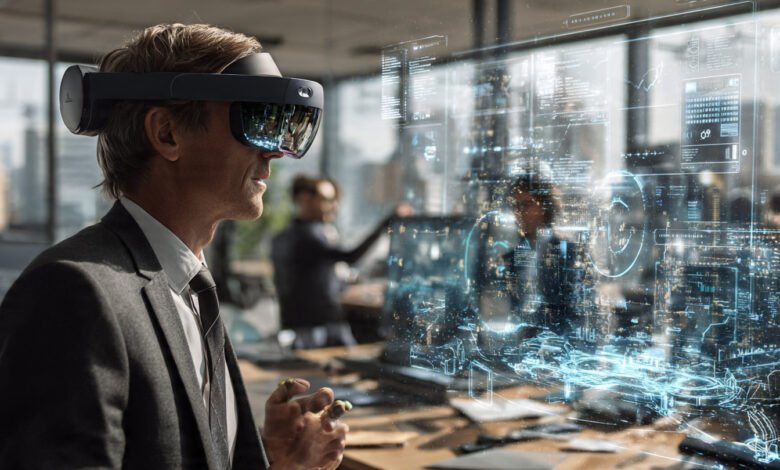
What is the metaverse? It’s a question that’s gone from a niche tech debate to a dinner-table conversation in just a few short years — and honestly, the confusion around it is fair. One minute it’s the future of the internet. The next, it’s a cautionary tale about corporate overreach. The reality, as usual, sits somewhere in the middle.
At its core, the metaverse is a shared, persistent digital universe where people interact through avatars in real time. It blends virtual reality (VR), augmented reality (AR), social interaction, commerce, entertainment, and digital ownership into one evolving ecosystem. Think of it less as a single platform and more as a concept — the next layer of the internet, built in three dimensions.
The term was coined by science fiction author Neal Stephenson in his 1992 novel Snow Crash, but it went mainstream when Mark Zuckerberg renamed Facebook to Meta Platforms in 2021 and bet the company’s future on it. Since then, it has attracted billions in investment, triggered a wave of skepticism, and quietly evolved into something more grounded and genuinely interesting than the hype cycle suggested.
This guide cuts through the noise. Whether you’re a curious newcomer, a business professional, or someone trying to understand what’s actually happening in spatial computing and immersive technology, this is where you start.
What Is the Metaverse? A Clear, Honest Definition
The metaverse is an interconnected network of persistent, three-dimensional virtual spaces where users interact with each other and the digital environment through avatars. Unlike a website or an app, which you visit and leave, the metaverse is always “on” — it continues to exist and evolve even when you log off.
The word itself is a combination of “meta” (meaning beyond) and “universe.” In practice, it refers to a spectrum of digital experiences: virtual reality environments, augmented reality overlays, blockchain-based digital economies, and social platforms that blur the line between the physical and digital worlds.
It’s important to note that there is no single metaverse — yet. What exists today is a collection of metaverse-adjacent platforms and technologies that are gradually converging. Platforms like Roblox, Decentraland, The Sandbox, and Meta’s Horizon Worlds each offer a piece of the puzzle.
The Metaverse vs. the Internet: What’s the Difference?
The internet is two-dimensional — you scroll, click, and read. The metaverse is immersive. Instead of looking at a screen, you step inside it. Instead of visiting a website, you inhabit a virtual space. Instead of sending a text, your avatar sits across a digital table from someone else’s avatar.
If the internet gave us information at our fingertips, the metaverse promises to put us inside the information. That’s a fundamentally different kind of interaction.
A Brief History of the Metaverse
Understanding what is the metaverse today requires a look at how it got here.


- 1992 — Neal Stephenson coins the term “metaverse” in Snow Crash. In the novel, humans escape a dystopian world by living in a virtual one.
- 2003 — Second Life launches, widely regarded as the first metaverse platform. It lets users create avatars, build virtual spaces, and even run businesses using its own digital currency.
- 2006–2010 — World of Warcraft, Habbo Hotel, and early Minecraft demonstrate that millions of people will spend significant time in shared virtual worlds.
- 2012–2016 — Oculus Rift crowdfunding campaign reignites interest in VR headsets. Facebook acquires Oculus for $2 billion in 2014.
- 2021 — Zuckerberg announces Meta’s pivot to the metaverse. NFTs and virtual real estate explode in value. The word “metaverse” becomes unavoidable.
- 2023–2024 — The hype deflates. Meta loses $16.1 billion in its Reality Labs division. Disney closes its metaverse unit. Apple launches Vision Pro, pointedly calling it a “spatial computer” rather than a metaverse device.
- 2025 — The metaverse quietly matures. AI integration, improved hardware, and practical enterprise use cases bring renewed, more realistic momentum.
How Does the Metaverse Work? The Core Technologies Explained
The metaverse isn’t powered by a single invention. It’s built on a stack of converging technologies that, together, create immersive, interactive, and economically active digital worlds.
1. Virtual Reality (VR)
Virtual reality completely replaces your physical surroundings with a digital environment. You wear a headset — like the Meta Quest, Sony PlayStation VR2, or Apple Vision Pro — and your field of vision becomes entirely digital. You can look around, move, pick up objects, and interact with other users.
VR is the most immersive gateway to the metaverse. It’s what most people picture when they think of the technology. The tradeoff has always been cost, comfort, and mobility, though headsets are getting lighter and cheaper every year.
2. Augmented Reality (AR)
Augmented reality layers digital information on top of the real world rather than replacing it. When you played Pokémon Go in 2016, you were using AR. When you use Snapchat filters or try on sunglasses through a brand’s app, that’s AR too.
In the context of the metaverse, AR is significant because it doesn’t require a headset. Smartphones are already AR-capable, which makes it a far more accessible entry point. AR glasses — still in early development from companies like Meta, Google, and various startups — aim to make this experience hands-free and persistent throughout the day.
3. Mixed Reality (MR) and Spatial Computing
Mixed reality sits between VR and AR. It allows digital objects to exist in the real world and interact with it — so a virtual screen can sit on your actual desk, or a digital character can walk around your living room and appear to move around your furniture.
Apple’s Vision Pro leans heavily into this approach, calling it spatial computing. It’s arguably the most practical near-term form of the metaverse because it doesn’t require users to completely disconnect from their surroundings.
4. Blockchain and Digital Ownership
One of the more revolutionary — and controversial — ideas in the metaverse is the concept of true digital ownership. Blockchain technology enables this by creating a verifiable, decentralized record of who owns what.
Non-fungible tokens (NFTs) are the most well-known application. An NFT can represent ownership of a piece of digital art, a virtual plot of land, an in-game item, or even a ticket to a virtual event. The idea is that in the metaverse, you own your assets the way you own a car or a piece of jewelry — they can’t be duplicated or taken from you without your consent.
Cryptocurrency is the currency of most blockchain-based metaverse platforms. Decentraland uses MANA. The Sandbox uses SAND. These economies allow users to buy, sell, and earn within virtual worlds.
5. Artificial Intelligence (AI)
Artificial intelligence is increasingly the engine behind the metaverse’s growing sophistication. AI enables:
- More realistic non-player characters (NPCs) that can hold conversations and respond intelligently
- Personalized virtual environments that adapt to user behavior and preferences
- AI-generated content, allowing users to build virtual worlds through text prompts rather than coding
- Real-time translation and accessibility features across languages and abilities
The convergence of AI and the metaverse is arguably the most exciting current development. As AI tools become more powerful, the gap between what’s possible and what’s practical in virtual worlds shrinks dramatically.
6. 5G and Edge Computing
None of these technologies work without the infrastructure to support them. 5G connectivity and edge computing are critical enablers. Real-time, immersive, multi-user virtual environments require enormous amounts of data to move extremely fast. Without low-latency, high-bandwidth networks, the experience breaks down.
This is one reason the metaverse remains inaccessible in many parts of the world. The rollout of 5G — and eventually 6G — is directly tied to when and where the metaverse becomes a mainstream reality.
Major Metaverse Platforms You Should Know About
If you want to understand what is the metaverse in practical terms, look at the platforms that are already live.
Roblox
Roblox is arguably the closest thing to a functioning metaverse right now. It’s a platform where users — predominantly but not exclusively younger audiences — create and play user-generated games and experiences. It has over 55 million daily active users and its own virtual economy based on a currency called Robux. It’s less about VR headsets and more about shared, persistent digital spaces.
Decentraland
Decentraland is a blockchain-based virtual world where users buy virtual land, build experiences, attend events, and trade digital assets. It’s fully decentralized, meaning no single company controls it. Governance decisions are made by the community through a DAO (decentralized autonomous organization).
The Sandbox
The Sandbox is a virtual world built on voxel-based graphics (think Minecraft-style blocks). Users can buy LAND, create games and experiences with a visual editor, and monetize their work. It has attracted partnerships with major brands including Adidas, Gucci, and Warner Music Group.
Meta Horizon Worlds
Horizon Worlds is Meta’s flagship metaverse platform, accessible via Meta Quest headsets. It’s been through a rocky stretch — user numbers have been lower than hoped and the platform has faced criticism for the quality of its graphics and safety concerns. Meta has continued investing heavily, and the platform has improved considerably.
Apple Vision Pro
Apple entered the spatial computing space in early 2024 with the Vision Pro, priced at $3,500. It deliberately avoided the word “metaverse,” but its core functionality — blending digital content with the physical world in an immersive, persistent way — is unmistakably metaverse-adjacent. It represents a more premium, productivity-oriented approach to the category.
Real-World Uses of the Metaverse Today
The metaverse is often discussed in the future tense, but practical applications exist right now.
Education and Training
Immersive learning environments are one of the most compelling use cases. Medical students can practice surgeries in virtual reality without any risk to patients. Firefighters can train for dangerous scenarios. Mechanics can learn to service complex machinery through AR overlays that show them exactly which bolt to turn. According to research published by PwC, VR learners complete training up to four times faster than classroom learners and are 275% more confident applying their skills afterward.
Remote Work and Collaboration
Virtual offices allow remote teams to feel genuinely present with each other. Platforms like Microsoft Mesh and Meta Workrooms let colleagues collaborate around virtual whiteboards, share 3D models, and hold meetings in immersive spaces rather than staring at a grid of webcam thumbnails. This doesn’t replace physical presence, but it’s a meaningful step beyond a video call.
Healthcare
Surgeons are already using AR during procedures to overlay patient data, imaging scans, and anatomical guides directly onto their field of view. VR is being used in pain management, physical therapy, and the treatment of anxiety disorders and PTSD. The immersive nature of the metaverse has real therapeutic applications that are already saving lives.
Retail and E-Commerce
Virtual showrooms allow customers to explore products in three dimensions, try on clothing through AR, and walk through virtual stores. Companies like IKEA have had AR apps for years that let you place digital furniture in your home before buying. The next step is fully immersive shopping environments in the metaverse — and brands are racing to get there.
Entertainment and Live Events
Travis Scott’s virtual concert in Fortnite drew 12.3 million concurrent viewers. Ariana Grande performed in a virtual reality event that millions attended simultaneously. These weren’t just marketing stunts — they were proof that live entertainment in the metaverse can reach audiences that no physical venue ever could.
Real Estate and Architecture
Virtual real estate has attracted serious investment. In 2021 and 2022, parcels of virtual land in platforms like Decentraland and The Sandbox sold for hundreds of thousands of dollars. Architects and property developers use VR to let clients walk through buildings that haven’t been built yet. The metaverse compresses the feedback loop between design and experience.
The Metaverse Economy: Digital Assets, NFTs, and Virtual Commerce
One of the most significant — and polarizing — aspects of the metaverse is its economy.
The metaverse introduces genuinely new economic models. Virtual land, digital fashion, in-game items, and digital art all carry real monetary value. According to data from Blockchain Council, the total market for virtual goods exceeded $100 billion in 2025, and that number is expected to grow as platforms mature and user bases expand.
NFTs provide verified proof of ownership for unique digital assets. If you buy a piece of virtual land as an NFT, no one can duplicate it or take it from you — your ownership is recorded on the blockchain. This matters because it enables genuine scarcity in the digital world, which is the foundation of any functional economy.
Creator economies are thriving within the metaverse. Developers, designers, and builders can earn income by creating and selling virtual experiences, items, clothing, and services. A 16-year-old who’s good at building in Roblox or The Sandbox can generate real revenue. This democratization of economic participation is one of the more genuinely exciting aspects of the metaverse.
However, the metaverse economy also carries real risks. Markets for NFTs and virtual real estate have been extraordinarily volatile. Many buyers who paid premium prices in 2021 and 2022 saw the value of their assets collapse by 90% or more. Speculation has outpaced actual utility in many corners of this space, and consumer protection frameworks are still largely nonexistent.
The Challenges Facing the Metaverse
No honest article about what is the metaverse can skip the very real problems it faces.
Accessibility and Cost
VR headsets still range from $300 to $3,500. High-speed internet — essential for immersive experiences — remains inaccessible in large parts of the world. The metaverse risks becoming a technology of the privileged unless the hardware and infrastructure costs come down significantly.
Privacy and Data Security
The metaverse collects more personal data than any previous technology. It can track your eye movements, your physical reactions, your location, your social interactions, and your economic behavior. The potential for surveillance and data misuse is enormous, and regulatory frameworks haven’t kept pace. According to the Electronic Frontier Foundation, immersive technologies raise fundamentally new privacy questions that existing laws weren’t designed to address.
Safety and Harassment
Reports of harassment — including sexual harassment — in platforms like Horizon Worlds highlight that the same toxicity problems plaguing social media don’t disappear in virtual worlds. In some ways, the immersive nature of the metaverse makes harmful interactions feel more visceral and distressing. Moderation at scale is an unsolved problem.
Interoperability
Right now, your assets in Decentraland don’t work in Roblox. Your avatar in one platform can’t move to another. The metaverse is still a collection of walled gardens rather than a connected open world. True interoperability — the ability to move between platforms with your identity and assets intact — remains one of the field’s biggest unsolved technical and political challenges.
Health Concerns
Extended time in VR environments has been linked to headaches, eye strain, nausea, and disorientation. There are also genuine concerns about what extended immersion in digital worlds does to mental health, physical activity levels, and social development — particularly for younger users. These aren’t hypothetical risks; they’re being documented now.
The Future of the Metaverse: Where Is This All Going?
The near-term story of the metaverse is less about fully immersive digital worlds and more about the gradual blending of digital and physical experience. A few trends worth watching:
- AI-generated worlds: Tools that let users build virtual environments through natural language prompts will dramatically lower the barrier to content creation. Imagine describing a virtual office or a game world in plain English and having it appear around you.
- Lighter hardware: The race to build comfortable, affordable AR glasses is accelerating. When a pair of glasses can project contextual information into your field of vision all day, the line between digital and physical reality starts to blur in everyday life.
- Industrial and enterprise adoption: The metaverse may have stumbled as a consumer product, but enterprises are finding genuine value in immersive training, virtual collaboration, and 3D product design. This quieter, practical adoption is where the technology is building its real foundation.
- Regulation: Governments are beginning to grapple with metaverse-specific regulation — covering data privacy, virtual economies, consumer protection, and content moderation. How these rules take shape will significantly affect how the metaverse develops.
A 2022 report from McKinsey & Company estimated that the metaverse could generate up to $5 trillion in value by 2030. Data firm Statista pegs the metaverse market at $74.4 billion in 2024, growing to $507.8 billion by 2030, with over 2.6 billion users. Those numbers might be ambitious, but they reflect a broad consensus that this technology — in some form — is going to be significant.
Is the Metaverse Dead?
After the hype of 2021–2022 and the losses that followed, this is a fair question. The honest answer is: no, but the version of the metaverse that was being sold to you in 2021 probably isn’t coming.
The idea of billions of people abandoning the physical world to work, shop, and socialize in VR headsets full-time was always more marketing pitch than roadmap. What’s actually happening is more gradual and more interesting. Spatial computing is improving. AI is filling in the gaps that raw graphics and hardware couldn’t. Businesses are finding real value in immersive technology. The user base for VR and AR continues to grow.
The metaverse isn’t dead. It’s recalibrating — and building toward something more durable than the initial burst of enthusiasm suggested.
Conclusion
The metaverse is one of the most genuinely complex and genuinely consequential technology shifts of our time. It’s not a single product or platform — it’s a direction. It combines virtual reality, augmented reality, blockchain, artificial intelligence, and new models of digital ownership into a vision of the internet that’s immersive, persistent, and economically active. The hype has cooled, which is actually useful — it leaves space for the real work of building something that matters.
Whether you’re a business looking for competitive advantage, an individual trying to understand the world you’re entering, or a skeptic who wants to know what the fuss is about, the answer to “what is the metaverse?” is this: it’s the most ambitious attempt yet to extend human experience into digital space, and it’s still early enough that the outcome isn’t written.