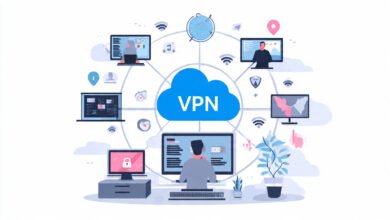
VPN Services Explained: Privacy, Security, and Streaming Benefits
Discover how VPN services protect your privacy, enhance security, and unlock streaming content. Learn about encryption, protocols, and choosing the right VPN.
The internet has become a minefield of privacy threats, security vulnerabilities, and frustrating geo-restrictions. Every time you connect to public Wi-Fi at a coffee shop, your internet service provider logs your browsing history, or a streaming platform blocks content based on your location, you’re experiencing the exact problems that VPN services were designed to solve.
A virtual private network does more than just hide your digital footprint. It creates an encrypted tunnel between your device and the internet, shielding your online activities from prying eyes while giving you the freedom to access content from anywhere in the world. Whether you’re concerned about hackers on unsecured networks, government surveillance, or simply want to watch your favorite shows while traveling abroad, understanding how VPN technology works is essential.
But here’s the thing: not all VPN services are created equal. The market is flooded with providers making bold claims about privacy and security, yet many fall short when you actually need them. Some keep logs of your IP address despite promising anonymity. Others slow your connection to a crawl or fail to bypass streaming restrictions. The difference between a quality VPN and a mediocre one can mean the gap between genuine protection and a false sense of security. This guide breaks down everything you need to know about VPN encryption, protocols, and practical benefits so you can make an informed choice.
What Is a VPN and How Does It Work?
A VPN creates a secure, encrypted connection between your device and a remote server operated by the VPN provider. Think of it as a private tunnel through the public internet. When you connect to a VPN service, all your internet traffic gets routed through this tunnel before reaching its final destination.
Here’s what happens behind the scenes:
Your device encrypts data using advanced encryption protocols before it leaves your computer or phone. This scrambled data becomes unreadable to anyone trying to intercept it, including your internet service provider, hackers, or government agencies.
The VPN server acts as a middleman between you and the websites you visit. Instead of seeing your real IP address, websites only see the IP address of the VPN server. This masks your true location and identity.
Data gets decrypted at the VPN server and forwarded to its destination. When the website sends information back, the process reverses. The VPN server receives it, encrypts it, and sends it back through the tunnel to your device.
The strength of this protection depends on several factors: the VPN protocol being used, the encryption standard, and whether the provider maintains a genuine no-logs policy. A solid VPN uses military-grade AES-256 encryption or modern alternatives like ChaCha20, which are virtually impossible to crack with current technology.
Privacy Benefits: Taking Control of Your Digital Footprint
Online privacy has become a luxury rather than a default setting. Your ISP tracks every website you visit, advertisers build detailed profiles of your behavior, and data breaches expose personal information with alarming frequency. VPN services offer a powerful way to reclaim your privacy.


Protection from ISP Surveillance
Your internet service provider can see everything you do online unless you use encryption. They log your browsing history, monitor your downloads, and may sell this data to advertisers or hand it over to authorities. When you connect to a VPN, your ISP only sees encrypted data flowing to the VPN server. They can’t determine which websites you visit or what you download.
Anonymous Browsing
Websites track visitors using IP addresses and cookies. Your IP address reveals your approximate location, your ISP, and can be used to build a profile of your online activities. A VPN replaces your real IP address with one from its server network, making it nearly impossible for websites to identify you.
No-Logs Policy Matters
The most critical factor for privacy is whether your VPN provider keeps logs. A genuine no-logs policy means the company doesn’t record your browsing history, connection times, IP addresses, or any data that could be traced back to you. Premium VPN services like <a href=”https://nordvpn.com” target=”_blank”>NordVPN</a> and ProtonVPN have undergone independent audits to verify their no-logging claims.
Look for VPNs that use RAM-only servers. These servers don’t write any data to hard drives, and everything gets wiped when the server reboots. This architectural choice makes it physically impossible to store user data, even if the provider wanted to.
Secure Public Wi-Fi Connections
Public Wi-Fi networks at airports, hotels, and cafes are notoriously insecure. Hackers can easily intercept unencrypted traffic on these networks, stealing passwords, credit card numbers, and personal information. A VPN encrypts all your data before it leaves your device, rendering it useless to anyone trying to intercept it.
Security Features: Your Digital Shield
While privacy focuses on anonymity, security protects you from active threats. Modern VPN services include multiple layers of protection that work together to keep you safe.
Military-Grade Encryption
The backbone of any VPN is its encryption. Most reliable providers use AES-256 encryption, the same standard used by governments and militaries worldwide. This cipher creates 2^256 possible combinations, making brute-force attacks computationally impossible even with supercomputers.
Newer VPN protocols like WireGuard use ChaCha20 encryption, which offers comparable security with better performance on mobile devices and systems without dedicated AES hardware acceleration.
VPN Protocols Explained
The VPN protocol determines how your data gets encrypted and transmitted. Each protocol balances security, speed, and compatibility differently:
WireGuard represents the cutting edge of VPN technology. With only 4,000 lines of code compared to OpenVPN’s 70,000+ lines, WireGuard is easier to audit and offers faster speeds. It uses modern cryptographic primitives including Curve25519 for key exchange, ChaCha20 for encryption, and Poly1305 for authentication.
OpenVPN remains the gold standard for configurability and proven security. It supports both UDP and TCP connections, works on virtually any platform, and gives administrators fine-grained control over encryption settings. While slightly slower than WireGuard, its long track record and extensive auditing make it the conservative choice for maximum security.
IKEv2/IPsec excels at mobile connections. It handles network transitions seamlessly, automatically reconnecting when you switch from Wi-Fi to cellular data. This makes it ideal for smartphones and tablets.
Kill Switch Protection
A kill switch is a critical security feature that prevents data leaks if your VPN connection drops unexpectedly. Without one, your traffic would revert to your regular internet connection, exposing your real IP address and unencrypted data.
Quality VPN services offer both application-level and system-level kill switches. The application version only blocks internet access for specific programs, while the system-level variant cuts all internet connectivity until the VPN reconnects.
DNS Leak Prevention
Even with a VPN active, your device might still send DNS (Domain Name System) requests through your regular ISP if not configured properly. This creates a DNS leak that reveals which websites you visit. Reliable VPNs run their own DNS servers and include leak protection to ensure all queries go through the encrypted tunnel.
You can test for leaks using tools like <a href=”https://www.dnsleaktest.com” target=”_blank”>DNSLeakTest.com</a>. A properly configured VPN should only show the VPN provider’s DNS servers, never your ISP’s.
Multi-Hop Connections
Also called double VPN, multi-hop routing sends your traffic through two VPN servers instead of one. Your data gets encrypted twice, and even if someone compromised one server, they couldn’t trace your activity back to you. This feature adds latency but provides an extra layer of security for high-risk situations.
Streaming Benefits: Accessing Content Without Borders
Streaming services have become the primary way people consume entertainment, but licensing agreements create frustrating geo-restrictions. A movie available on Netflix in one country might be completely unavailable in another. VPN services solve this problem by making it appear as though you’re accessing content from a different location.
How VPNs Bypass Geo-Restrictions
When you connect to a VPN server in a specific country, websites see that server’s IP address instead of yours. To Netflix, Hulu, or BBC iPlayer, it looks like you’re physically located in that country, granting you access to their regional content library.
However, streaming platforms actively work to detect and block VPN traffic. They maintain databases of known VPN IP addresses and use sophisticated techniques like DNS poisoning and port blocking. This cat-and-mouse game means only the best VPN services consistently work with popular streaming services.
Best VPNs for Streaming
Premium providers maintain large server networks and constantly refresh their IP addresses to stay ahead of detection. NordVPN operates over 6,700 servers across 111 countries, providing reliable access to Netflix libraries worldwide, plus Disney+, HBO Max, Amazon Prime Video, and more.
ExpressVPN excels at bypassing restrictions with fast speeds that support 4K streaming without buffering. Surfshark offers unlimited simultaneous connections, making it ideal for households where multiple people want to stream different content.
Avoiding Bandwidth Throttling
Some internet service providers deliberately slow down streaming traffic to manage network congestion or encourage users to upgrade their plans. This bandwidth throttling results in endless buffering and reduced video quality.
Since a VPN encrypts all your traffic, your ISP can’t see that you’re streaming video. They only see encrypted data, so they can’t selectively throttle specific types of content. This often results in faster, more consistent streaming speeds, especially during peak hours.
Sports and Live Events
VPN services are particularly valuable for sports fans. Broadcasting rights vary by region, meaning a game shown for free in one country might require an expensive subscription elsewhere. By connecting to a VPN server in the right location, you can access local sports broadcasts and avoid blackout restrictions.
Choosing the Right VPN Service
With hundreds of VPN providers competing for your attention, making the right choice requires understanding what actually matters.
Server Network Size and Locations
A large server network offers several advantages. More servers mean less congestion and better speeds. Geographic diversity lets you access content from more countries and find servers close to your physical location for the fastest connections.
However, raw numbers can be misleading. Three thousand servers in five countries is less useful than one thousand servers spread across fifty countries. Look for providers with servers in the specific locations you need.
Speed Performance
VPN encryption and routing add overhead that inevitably reduces speeds compared to your direct internet connection. The question is how much. Top-tier VPN services using WireGuard protocol typically maintain 85-95% of your base speed, which is imperceptible in practice.
Distance matters significantly. Connecting to a nearby server will always be faster than routing through one on the opposite side of the world. For streaming and gaming, choose servers geographically close to both you and the content provider.
Privacy Jurisdiction
Where a VPN company is legally based affects what data they can be forced to hand over. Countries in the Five Eyes, Nine Eyes, and Fourteen Eyes intelligence alliances share surveillance data with each other. Providers based in privacy-friendly jurisdictions like Panama, Switzerland, or the British Virgin Islands operate under more protective laws.
Simultaneous Connections
Most VPN services allow between 5-10 simultaneous connections per subscription. Some, like Surfshark and IPVanish, offer unlimited connections. Consider how many devices you need to protect: smartphones, tablets, laptops, smart TVs, and routers all count toward this limit.
Additional Features
Modern VPN providers bundle extra tools to increase value. Ad blockers filter out malicious ads and trackers. Malware protection scans downloads for threats. Split tunneling lets you route some apps through the VPN while others use your regular connection.
Dedicated IP addresses cost extra but solve problems with services that flag shared VPN IPs as suspicious. You get a static IP address used only by you, reducing CAPTCHAs and login verification requests.
Common VPN Misconceptions
Despite growing awareness, several myths about VPN services persist that deserve clearing up.
VPNs Don’t Guarantee Complete Anonymity
A VPN dramatically improves your privacy, but it doesn’t make you invisible. Websites can still track you using cookies, browser fingerprinting, and account logins. Social media platforms know who you are when you’re logged in, regardless of your IP address.
For true anonymity, you need to combine a VPN with other privacy tools like the Tor browser, disable JavaScript, and avoid logging into any accounts that could identify you.
Free VPNs Come With Hidden Costs
Free VPN services need to make money somehow. Many do this by logging and selling your browsing data to advertisers, the exact opposite of what a VPN should do. Others inject ads into websites you visit or severely limit speeds and data allowances.
The few legitimate free options like Proton VPN Free offer unlimited data but restrict you to slower speeds and limited server locations. For anything beyond basic browsing, a paid VPN is worth the modest cost.
VPNs Are Legal in Most Countries
Using a VPN is perfectly legal in most of the world. Countries with strict internet censorship like China, Russia, Iran, and the UAE restrict or ban VPN use, but even there, many people successfully use VPN services with obfuscation features.
However, using a VPN doesn’t make illegal activities legal. Copyright infringement, hacking, and other crimes remain illegal regardless of whether you’re using a VPN.
Setting Up and Using Your VPN
Getting started with a VPN service is straightforward, even if you’re not technically inclined.
Most providers offer dedicated apps for Windows, macOS, iOS, and Android that handle all the configuration automatically. Download the app, log in with your account credentials, and click connect. The VPN will automatically choose the fastest available server, though you can manually select a specific country if needed.
For streaming, connect to a server in the country where your desired content is available. Want to watch UK Netflix? Choose a London server. After connecting, clear your browser cookies or use an incognito window to ensure the streaming platform sees your new location.
The best VPN protocols for most users are WireGuard or OpenVPN UDP. WireGuard offers the fastest speeds and best battery life on mobile devices. OpenVPN provides maximum compatibility and configurability. Your VPN app likely defaults to the optimal choice.
Enable the kill switch in your VPN settings to prevent accidental data leaks. This becomes especially important if you frequently switch between networks or use your laptop on the go.
Conclusion
VPN services have evolved from niche tools for privacy enthusiasts into essential software for anyone who values their online privacy and wants unrestricted access to the internet. The combination of strong encryption, robust security features, and the ability to bypass geo-restrictions makes a quality VPN one of the most versatile tools in your digital toolkit. Whether you’re protecting sensitive data on public Wi-Fi, preventing your internet service provider from logging your online activities, or accessing streaming content from anywhere in the world, choosing a reputable provider with a verified no-logs policy and modern VPN protocols like WireGuard or OpenVPN ensures you get genuine protection rather than empty promises. The modest monthly cost of a premium VPN delivers value far beyond its price when you consider the privacy, security, and freedom it provides.