Quantum Computing Explained: What Every Tech Enthusiast Should Know
Quantum computing explained simply for tech enthusiasts. Learn how quantum computers work, their real-world applications, and why they matter for the future.

Quantum computing is no longer just theoretical physics confined to university labs. It’s rapidly becoming one of the most talked-about technologies in the tech world, and for good reason. While your laptop processes information using bits that are either 0 or 1, quantum computers use quantum bits or qubits that can exist in multiple states simultaneously. This fundamental difference gives quantum machines the potential to solve problems that would take classical computers thousands of years to crack.
If you’re a tech enthusiast trying to wrap your head around quantum computing, you’re in the right place. This technology promises to revolutionize everything from drug discovery and cryptography to artificial intelligence and climate modeling. Major tech companies like IBM, Google, and Microsoft are pouring billions into quantum research, while startups are racing to build practical quantum applications.
But here’s the thing: quantum computing is genuinely complex. It operates on principles that seem to defy common sense, like particles existing in two places at once or influencing each other across distances. Despite this weirdness, understanding the basics of quantum computing isn’t impossible. This guide breaks down what quantum computers are, how they work, why they matter, and what challenges still stand in the way of widespread adoption.
What Is Quantum Computing and Why Does It Matter?
Quantum computing represents a fundamentally different approach to processing information compared to the classical computers we use every day. Instead of processing data sequentially using transistors that switch between on and off states, quantum computers leverage bizarre quantum mechanical phenomena to perform calculations.
The Quantum Advantage
The real power of quantum computers comes from three key quantum properties:
- Superposition: Qubits can exist in multiple states simultaneously until measured
- Entanglement: Qubits can be correlated in ways that have no classical equivalent
- Quantum interference: Quantum states can be manipulated to amplify correct answers and cancel out wrong ones
These properties allow quantum computers to explore vast numbers of possible solutions simultaneously. For certain types of problems, this creates an exponential speedup compared to classical computing approaches.
Why Tech Enthusiasts Should Care
Quantum computing isn’t just faster than classical computing. It’s a completely different computational paradigm that could unlock solutions to problems currently beyond our reach. According to IBM’s quantum computing resources, quantum systems could transform industries by optimizing complex logistics, discovering new materials, and breaking current encryption methods.
The technology is still in its early stages, similar to where classical computers were in the 1950s. But the trajectory is clear, and understanding quantum computing basics now positions you to grasp the revolutionary changes coming in the next decade.
How Quantum Computers Actually Work
Let’s break down the mechanics of quantum computing without getting lost in the physics.
Classical Bits vs Quantum Bits
Your computer’s processor uses bits as the fundamental unit of information. Each bit is definitely either 0 or 1 at any given moment. Eight bits make a byte, and through billions of these binary operations per second, your computer runs everything from web browsers to video games.


Qubits work differently. Thanks to superposition, a qubit can be in a state that’s 0, 1, or both simultaneously. When you have two qubits, they can exist in four states at once. Three qubits can represent eight states. This exponential scaling means 300 qubits could theoretically represent more states than there are atoms in the universe.
The Role of Quantum Entanglement
Quantum entanglement is what Einstein famously called “spooky action at a distance.” When qubits become entangled, the state of one instantly influences the state of another, regardless of the distance between them. This correlation allows quantum computers to process information in ways impossible for classical systems.
In practical terms, entanglement enables quantum algorithms to explore multiple solution paths simultaneously while maintaining relationships between different parts of the problem. It’s what makes quantum computers particularly good at optimization problems and simulating quantum systems.
Quantum Gates and Circuits
Just as classical computers use logic gates (AND, OR, NOT) to manipulate bits, quantum computers use quantum gates to manipulate qubits. However, quantum gates are reversible and can create superposition and entanglement.
Quantum circuits are sequences of quantum gates applied to qubits. Unlike classical circuits that flow in one direction, quantum circuits can create feedback loops and interferences that guide the system toward correct answers.
The Measurement Problem
Here’s where things get strange. While a qubit is in superposition, it contains multiple possibilities. But the moment you measure it, the superposition collapses into a definite state of either 0 or 1. This is why quantum computing algorithms must be designed carefully to manipulate qubits such that measuring them at the end yields useful information.
Quantum algorithms typically run many times, with measurements providing probabilistic results that converge on the correct answer.
Types of Quantum Computing Systems
Not all quantum computers are built the same way. Different approaches use different physical systems to create and maintain qubits.
Superconducting Qubits
Superconducting quantum computers, like those built by Google and IBM, use circuits cooled to near absolute zero. At these extreme temperatures, materials become superconductors with zero electrical resistance, allowing quantum effects to emerge at the macro scale.
Key characteristics:
- Require temperatures colder than outer space (around 15 millikelvin)
- Fast gate operations (nanoseconds)
- Currently leading commercial approach
- Vulnerable to thermal noise and require sophisticated error correction
Trapped Ion Quantum Computers
Companies like IonQ and Honeywell use individual atoms trapped by electromagnetic fields as qubits. Lasers manipulate these trapped ions to perform quantum operations.
Key characteristics:
- High-fidelity operations with low error rates
- Longer coherence times than superconducting qubits
- Slower gate operations (microseconds)
- More stable and easier to maintain
Photonic Quantum Computing
This approach uses photons (light particles) as qubits. Companies like Xanadu and PsiQuantum are developing photonic systems that could operate at room temperature.
Key characteristics:
- No extreme cooling required
- Natural for quantum communication
- Challenging to create photon-photon interactions
- Promising for quantum networking
Topological Quantum Computing
Microsoft is pursuing a theoretical approach using exotic particles called anyons that are more resistant to errors. This remains largely experimental but could offer superior stability if successfully realized.
Real-World Applications of Quantum Computing
Quantum computing isn’t just theoretical. Here are areas where quantum systems are expected to make a genuine impact:
Drug Discovery and Molecular Simulation
Classical computers struggle to simulate molecular interactions because the number of possible quantum states grows exponentially with molecule size. Quantum computers can naturally simulate quantum systems, potentially revolutionizing drug discovery.
Pharmaceutical companies could screen millions of molecular combinations virtually, identifying promising drug candidates in weeks rather than years. According to Nature’s quantum computing research, quantum simulations could help design more effective medications with fewer side effects.
Cryptography and Cybersecurity
Current encryption methods rely on the difficulty of factoring large numbers, something classical computers struggle with. Quantum computers running Shor’s algorithm could theoretically break widely used encryption like RSA in hours.
This threat has sparked the development of quantum-resistant cryptography and quantum key distribution, which uses quantum properties to create theoretically unbreakable encryption.
Optimization Problems
From routing delivery trucks to scheduling flights, optimization problems plague every industry. Quantum computing excels at exploring vast solution spaces simultaneously.
Applications include:
- Supply chain optimization
- Financial portfolio management
- Traffic flow optimization
- Resource allocation in cloud computing
- Manufacturing process improvement
Artificial Intelligence and Machine Learning
Quantum machine learning is an emerging field combining quantum computing with AI. Quantum systems could train neural networks faster, identify patterns in complex datasets more efficiently, and solve optimization problems central to machine learning.
Quantum algorithms might enable AI systems to process more parameters and find global optima that classical gradient descent misses.
Climate Modeling and Weather Prediction
Climate systems involve countless interacting variables. Quantum computers could run more detailed simulations, improving climate models and weather predictions. Better modeling could inform policy decisions and help humanity respond to climate change more effectively.
Current Limitations and Challenges
Despite the hype, quantum computing faces significant hurdles before widespread practical deployment.
Quantum Decoherence
Qubits are incredibly fragile. Environmental noise from temperature fluctuations, electromagnetic radiation, or even cosmic rays can cause qubits to lose their quantum properties, a process called decoherence. Current qubits maintain coherence for mere microseconds to milliseconds.
This fragility is why quantum computers require extreme isolation, including:
- Ultra-cold temperatures
- Electromagnetic shielding
- Vibration isolation
- Vacuum environments
Error Rates and Quantum Error Correction
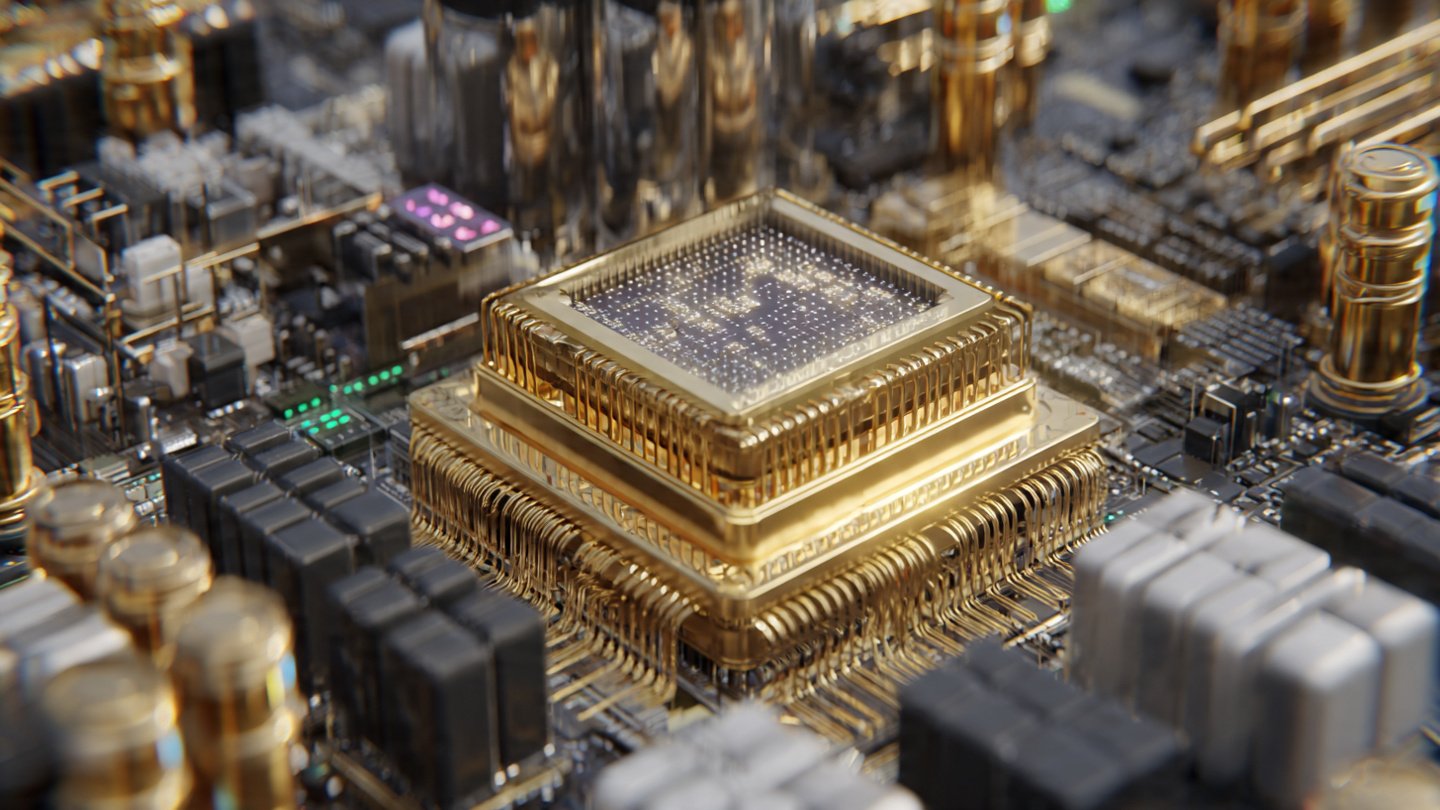
Current quantum computers have error rates around 0.1% to 1% per operation, far higher than classical computers’ one error in a billion operations. Quantum error correction requires using multiple physical qubits to create one logical qubit, dramatically increasing hardware requirements.
Researchers estimate we need error rates below 0.01% and thousands of physical qubits per logical qubit before quantum computers can run practical algorithms reliably.
Scalability Issues
Building quantum computers with hundreds or thousands of qubits is extraordinarily difficult. Each additional qubit must maintain entanglement with others while remaining isolated from the environment. Current systems have 50 to 1000 qubits, but we likely need millions of qubits for truly transformative applications.
Limited Algorithm Development
We only know a handful of problems where quantum computers demonstrably outperform classical systems. Quantum algorithms are hard to develop because they require rethinking computational approaches from the ground up.
Cost and Accessibility
Quantum computers cost tens of millions of dollars and require specialized facilities and expertise to operate. While cloud access democratizes experimentation, the technology remains far from consumer-ready.
Major Players in Quantum Computing
The quantum computing landscape includes tech giants, startups, and government initiatives.
IBM Quantum
IBM has been a quantum leader since the 1990s. Their cloud-based IBM Quantum Experience allows developers to run experiments on real quantum hardware. IBM’s roadmap aims for 100,000-qubit systems by 2033.
Google Quantum AI
Google claimed quantum supremacy in 2019 when its Sycamore processor performed a specific calculation faster than the world’s best supercomputers. They continue pushing quantum hardware and algorithm development.
Microsoft Azure Quantum
Microsoft offers a cloud quantum ecosystem, partnering with hardware providers. They’re also developing topological qubits and quantum programming languages like Q#.
Amazon Braket
Amazon’s quantum service provides access to different quantum hardware types through AWS, lowering barriers for businesses exploring quantum computing.
Startups and Specialists
Companies like Rigetti, IonQ, D-Wave (focusing on quantum annealing), and PsiQuantum are advancing different quantum approaches, creating a diverse and competitive landscape.
How to Get Started Learning Quantum Computing
Interested in quantum computing but unsure where to begin? Here’s your roadmap:
Build the Foundation
You don’t need a physics PhD, but understanding these concepts helps:
- Linear algebra (vectors, matrices)
- Complex numbers
- Basic probability
- Classical computing fundamentals
Online Courses and Resources
Free resources:
- IBM Quantum LearningPlatformm
- Microsoft Quantum Katas
- Qiskit textbook
- Quantum Country interactive guide
Structured courses:
- edX and Coursera offer university-level quantum computing courses
- YouTube channels like Quantum Computing for the Determined
- MIT OpenCourseWare quantum information science classes
Hands-On Programming
Learn quantum programming languages:
- Qiskit (IBM’s Python framework)
- Cirq (Google’s framework)
- Q# (Microsoft’s language)
- Ocean (D-Wave’s tools)
Cloud platforms let you run code on real quantum hardware for free or low cost, providing invaluable hands-on experience with actual quantum systems.
Join the Community
The quantum computing community is surprisingly accessible:
- Qiskit Slack workspace
- Quantum Computing Stack Exchange
- Local quantum computing meetups
- Quantum hackathons and competitions
Stay Current
The field moves fast. Follow:
- Quantum computing research papers on arXiv
- Company blogs from IBM, Google, Microsoft
- Quantum computing newsletters
- Tech publications covering quantum advances
The Future of Quantum Computing
Where is quantum computing headed in the next 5 to 10 years?
Near-Term: NISQ Era
We’re in the Noisy Intermediate-Scale Quantum (NISQ) era, with quantum computers having 50 to 1000 noisy qubits. These systems can’t run full error correction, but might demonstrate practical advantages for specific problems.
Expect NISQ applications in:
- Quantum chemistry simulations for materials science
- Optimization for logistics and finance
- Quantum machine learning experiments
- Improved quantum algorithm development
Medium-Term: Fault-Tolerant Quantum Computing
As error correction improves, quantum computers will run longer, more complex algorithms reliably. This fault-tolerant era might arrive in the 2030s, enabling:
- Breaking current encryption
- Revolutionary drug discovery processes
- Advanced AI capabilities
- Detailed climate and economic modeling
Long-Term: Quantum Internet
Researchers are developing quantum networks that could transmit quantum information globally. A quantum internet would enable:
- Perfectly secure communication
- Distributed quantum computing
- Enhanced sensor networks
- New forms of quantum-enhanced applications we haven’t imagined yet
Quantum Computing and Society
As quantum computing matures, society must address:
- Encryption standards transitioning to quantum-resistant algorithms
- Equitable access to quantum resources
- Workforce training for quantum technologies
- Regulatory frameworks for quantum applications
- Ethical considerations around quantum-enhanced AI
Quantum Computing vs Classical Computing: Key Differences
Understanding the fundamental distinctions helps clarify when quantum computing provides advantages:
| Aspect | Classical Computing | Quantum Computing |
|---|---|---|
| Information unit | Bits (0 or 1) | Qubits (superposition of states) |
| Processing | Sequential, deterministic | Parallel, probabilistic |
| Best for | General computing tasks | Specific complex problems |
| Stability | Extremely stable | Highly fragile |
| Error rates | ~1 in 10^9 operations | ~1 in 100 operations |
| Scalability | Well-established | Major challenge |
| Temperature | Room temperature | Near absolute zero (for most) |
Quantum computers won’t replace classical computers. Instead, they’ll complement them, handling specialized tasks while classical systems continue everyday computing.
Common Myths About Quantum Computing
Let’s debunk misconceptions about quantum computing:
Myth 1: Quantum Computers Are Just Faster Classical Computers
Reality: Quantum computers aren’t universally faster. For many tasks like word processing or browsing the web, classical computers are superior. Quantum advantage appears only for specific problem types.
Myth 2: Quantum Computing Will Solve All Our Problems
Reality: Many important problems don’t benefit from quantum computing. It’s a specialized tool, not a magic solution.
Myth 3: Quantum Computers Are Ready for Mainstream Use
Reality: Current quantum computers are experimental. Practical, large-scale applications remain years away.
Myth 4: You Can Buy a Quantum Computer for Your Home
Reality: Consumer quantum computers aren’t coming anytime soon. The infrastructure requirements (extreme cooling, isolation) make home systems impractical.
Myth 5: Quantum Computing Will Immediately Break All Encryption
Reality: While theoretically possible, breaking real-world encryption requires fault-tolerant quantum computers with millions of qubits, which don’t exist yet. The cryptography community is developing quantum-resistant algorithms proactively.
Preparing for the Quantum Future
Even though widespread quantum computing applications are years away, now is the time to prepare.
For Businesses
Organizations should:
- Monitor quantum computing developments in their industry
- Assess vulnerabilities in current encryption methods
- Begin transitioning to quantum-resistant cryptography
- Explore quantum computing pilot projects through cloud platforms
- Train technical teams on quantum basics
For Developers
Software developers can:
- Learn quantum programming fundamentals
- Experiment with quantum frameworks
- Understand quantum algorithm design patterns
- Follow hybrid classical-quantum computing approaches
- Contribute to open-source quantum projects
For Students and Educators
Education systems should:
- Integrate quantum concepts into computer science curricula
- Provide access to quantum computing resources
- Encourage quantum research projects
- Build partnerships with quantum computing organizations
- Create quantum literacy programs
For Policymakers
Governments must:
- Fund quantum research and education
- Developa quantum-safe national security infrastructure
- Create regulatory frameworks for quantum technologies
- Support quantum workforce development
- Foster international quantum collaboration
Conclusion
Quantum computing represents one of the most exciting frontiers in technology. While challenges remain significant, from error rates to scalability, the potential applications in drug discovery, optimization, cryptography, and artificial intelligence make this technology worth understanding. Current quantum computers are imperfect and limited, but they’re improving rapidly. Major tech companies and startups are making genuine progress toward practical quantum systems. For tech enthusiasts, now is the perfect time to learn quantum computing basics, experiment with quantum programming frameworks, and watch as this revolutionary technology transforms from theory to reality. The quantum future isn’t just coming, it’s already beginning.