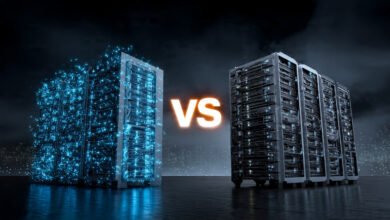
Edge Computing vs Cloud Computing: Which Technology Wins in 2026?
Edge computing vs cloud computing in 2026: discover which technology leads for speed, cost, scalability, and real-world applications in this comprehensive guide.

The battle between edge computing and cloud computing has reached a critical point in 2026. As businesses push for faster data processing, lower latency, and smarter infrastructure, choosing the right computing model isn’t just a technical decision anymore. It’s a strategic one that can make or break your competitive advantage.
Cloud computing revolutionized how we store and process data by centralizing resources in massive data centers. It brought scalability, cost efficiency, and accessibility to businesses of all sizes. But as IoT devices multiplied and real-time applications became standard, a new challenger emerged. Edge computing flips the script by processing data closer to where it’s generated, cutting out the middleman and slashing response times.
So which technology actually wins in 2026? The answer isn’t as simple as picking one over the other. Each has strengths that shine in different scenarios, and understanding when to use edge computing vs cloud computing can transform how your business operates. This article breaks down everything you need to know: how each technology works, its key differences, real-world applications, and practical guidance on choosing the right solution for your specific needs. Whether you’re running IoT sensors, building AI applications, or managing enterprise data, you’ll walk away with clarity on where these technologies stand today.
What Is Cloud Computing?
Cloud computing delivers computing services over the internet, including storage, processing power, databases, networking, and software. Instead of owning physical servers, businesses rent resources from providers like Amazon Web Services, Microsoft Azure, or Google Cloud Platform.
The beauty of cloud computing lies in its simplicity. You pay for what you use, scale resources up or down on demand, and access your data from anywhere with an internet connection. This model eliminated the need for massive upfront infrastructure investments that used to be a barrier for startups and small businesses.
Key Characteristics of Cloud Computing
- Centralized data processing in large data centers
- On-demand scalability that grows with your needs
- Pay-as-you-go pricing models
- Remote accessibility from any location
- Managed infrastructure handled by the provider
Cloud providers maintain the hardware, handle security updates, and ensure high availability. This frees up your IT team to focus on building applications rather than maintaining servers. The National Institute of Standards and Technology (NIST) defines five essential characteristics of cloud computing: on-demand self-service, broad network access, resource pooling, rapid elasticity, and measured service.
What Is Edge Computing?
Edge computing processes data at or near the source of data generation rather than sending it to a centralized cloud. Think of it as bringing the computing power to where the action happens, whether that’s a factory floor, a self-driving car, or a smart city sensor.
The driving force behind edge computing is the need for speed. When milliseconds matter, like in autonomous vehicles or industrial automation, sending data to a distant cloud server and waiting for a response simply won’t cut it. Edge computing solves this by doing the heavy lifting locally.
Core Features of Edge Computing
- Distributed architecture with processing at the network edge
- Ultra-low latency for real-time applications
- Reduced bandwidth usage by filtering data locally
- Enhanced privacy by keeping sensitive data on-premises
- Offline capability when internet connectivity fails
Edge computing doesn’t mean abandoning the cloud entirely. Most edge deployments work in tandem with cloud infrastructure, processing time-sensitive data locally while sending aggregated insights to the cloud for long-term storage and deeper analysis.
Edge Computing vs Cloud Computing: Understanding the Core Differences
The fundamental difference between edge computing and cloud computing comes down to where data processing happens and what that means for performance, cost, and control.


Processing Location
Cloud computing centralizes processing in massive data centers that might be hundreds or thousands of miles from the data source. Your smartphone uploads a photo to the cloud, servers process it, and the result comes back to you.
Edge computing distributes processing across numerous smaller locations closer to data sources. Your smart doorbell analyzes video footage right there on the device, only sending alerts when it detects motion.
Latency and Response Time
Latency measures the delay between requesting data and receiving a response. Cloud computing typically operates with a latency ranging from 50 to 500 milliseconds, depending on network conditions and server location.
Edge computing can achieve latency under 10 milliseconds because data doesn’t travel far. For applications like remote surgery, augmented reality, or autonomous vehicles, this difference is literally life-changing.
Bandwidth Requirements
Cloud computing requires substantial bandwidth to constantly stream data to and from centralized servers. As the number of connected devices explodes, this creates a bandwidth bottleneck.
Edge computing dramatically reduces bandwidth needs by processing data locally and only transmitting essential information. A smart factory might analyze sensor data from thousands of machines at the edge, sending only summaries or anomaly alerts to the cloud.
Scalability Approach
Cloud computing offers virtually unlimited vertical scaling. Need more processing power? Spin up additional virtual machines in seconds. The infrastructure grows with minimal effort on your part.
Edge computing scales horizontally by adding more edge nodes, which requires more planning and physical deployment. However, this distributed model can actually scale more efficiently for geographically dispersed operations.
Cost Structure
Cloud computing follows an operational expense model. You pay monthly fees based on usage, which can become expensive at scale but requires little upfront investment.
Edge computing involves higher initial capital expenses for equipment and installation, but ongoing operational costs can be lower since you’re not constantly paying for cloud bandwidth and processing.
Real-World Applications: When to Choose Edge Computing
Edge computing excels in scenarios where speed, privacy, or connectivity issues make cloud reliance impractical. Here’s where it dominates in 2026.
Autonomous Vehicles
Self-driving cars generate roughly 4 terabytes of data per day. Sending all that to the cloud for processing would be impossible. Edge computing enables vehicles to make split-second decisions locally. Sensors detect a pedestrian, edge processors analyze the threat, and brakes engage in milliseconds. Only summary data and map updates go to the cloud.
Industrial IoT and Manufacturing
Smart factories use edge computing to monitor production lines in real time. Sensors track machine performance, vibration, and temperature. Edge processors detect anomalies immediately and trigger maintenance alerts or shutdowns before catastrophic failures occur. This predictive maintenance saves manufacturers millions in downtime costs.
Healthcare and Remote Patient Monitoring
Wearable devices and medical sensors collect health data continuously. Edge computing analyzes this data locally, alerting patients and doctors to dangerous vital signs without delay. Privacy is another huge factor. Processing medical data at the edge keeps sensitive information from traversing public networks unnecessarily.
Retail and Customer Experience
Smart retail stores use edge computing for real-time inventory management, facial recognition for personalized experiences, and instant payment processing. When a customer picks up a product, edge systems update inventory immediately, analyze purchase patterns, and adjust pricing dynamically.
Smart Cities and Infrastructure
Traffic management systems process video feeds from thousands of cameras using edge computing to optimize signal timing, detect accidents, and reroute traffic. Energy grids use edge processors to balance load distribution in real time, preventing blackouts during peak demand.
Real-World Applications: When Cloud Computing Still Reigns
Despite the edge computing hype, cloud computing remains the superior choice for many use cases in 2026.
Big Data Analytics and Machine Learning
Training complex AI models requires massive computational resources and datasets. Cloud computing provides the GPU clusters and storage capacity needed for deep learning. Companies upload historical data to the cloud, train models on distributed systems, and deploy those models to edge devices afterward.
Enterprise Resource Planning and Business Applications
Most business software runs better in the cloud. CRM systems, accounting software, HR platforms, and collaboration tools benefit from centralized access, automatic updates, and easy integration. Cloud computing makes these tools available to employees worldwide without maintaining separate instances.
Web Hosting and Content Delivery
Websites, streaming services, and mobile app backends rely on cloud computing for global reach and scalability. Content delivery networks cache data in cloud servers worldwide, serving users from the nearest location. This hybrid approach combines cloud scalability with geographic distribution.
Backup and Disaster Recovery
Cloud computing excels at long-term data storage and protection. Businesses back up critical data to multiple cloud regions, ensuring recovery even if natural disasters destroy local infrastructure. The cloud’s redundancy and geographic distribution provide peace of mind that edge systems alone cannot match.
Software Development and Testing
Developers use cloud computing to spin up test environments instantly, collaborate globally, and integrate DevOps pipelines. The flexibility to create and destroy resources on demand makes cloud infrastructure ideal for development workflows where requirements constantly change.
Edge Computing vs Cloud Computing: Security Considerations
Security looks different when you compare edge computing and cloud computing, with each model presenting unique challenges and advantages.
Cloud Computing Security
Cloud computing centralizes security controls, making it easier to implement consistent policies, monitoring, and updates. Major cloud providers invest billions in security infrastructure that most individual companies couldn’t afford. They employ dedicated security teams, achieve compliance certifications, and provide built-in tools for encryption, access control, and threat detection.
However, centralization creates a single point of failure. A breach in a cloud provider’s systems can expose data from thousands of customers. The Cybersecurity and Infrastructure Security Agency (CISA) recommends regular security assessments and following shared responsibility models where providers secure the infrastructure while customers secure their data and applications.
Edge Computing Security
Edge computing distributes data across many locations, reducing the impact of any single breach. Sensitive data can stay on-premises, never touching public networks. This appeals to industries with strict privacy requirements like healthcare and finance.
The challenge? Each edge device becomes a potential vulnerability. Securing hundreds or thousands of distributed endpoints requires robust device management, regular firmware updates, and physical security measures. Edge devices in remote locations might be physically accessible to attackers, creating risks that centralized data centers don’t face.
Hybrid Security Approaches
Most organizations in 2026 adopt hybrid models, processing sensitive data at the edge while leveraging cloud security tools for monitoring and analysis. Security logs from edge devices flow to the cloud for centralized threat detection, while critical operations remain air-gapped from the internet.
Performance Metrics: How Edge Computing and Cloud Computing Stack Up
Let’s compare edge computing vs cloud computing across key performance indicators that matter in 2026.
Latency Comparison
- Cloud Computing: 50-500ms typical latency
- Edge Computing: 1-10ms typical latency
For video streaming or email, cloud latency is fine. For industrial robotics or VR gaming, edge wins hands down.
Bandwidth Efficiency
A smart city with 10,000 cameras streaming to the cloud uses approximately 50 Gbps of bandwidth. The same system with edge computing analyzing video locally might use less than 1 Gbps by only sending alerts and metadata.
Reliability and Uptime
Cloud computing providers typically guarantee 99.9% to 99.99% uptime through redundant infrastructure. However, that assumes reliable internet connectivity.
Edge computing systems can continue operating during internet outages, making them more reliable for critical applications. A factory doesn’t stop production because the internet went down.
Processing Power
Cloud computing offers virtually unlimited processing capacity. Need to render a 3D animation or process years of financial data? The cloud can marshal thousands of processors instantly.
Edge computing has more limited processing power per node but distributes that power where it’s needed. A thousand edge devices can collectively outperform a single cloud instance for geographically distributed tasks.
Cost Analysis: Edge Computing vs Cloud Computing in 2026
Understanding the true cost of edge computing and cloud computing requires looking beyond sticker prices.
Cloud Computing Costs
Cloud computing pricing typically includes:
- Compute resources (virtual machines, containers)
- Storage (block, object, archival)
- Network bandwidth (data transfer fees)
- Additional services (databases, AI tools, monitoring)
Monthly bills scale with usage. A small business might spend $500 monthly, while enterprises can rack up millions. The predictability is both a benefit and a risk. Costs grow steadily as your needs expand, and unexpected traffic spikes can trigger surprise bills.
Edge Computing Costs
Edge computing requires:
- Initial hardware purchase (servers, sensors, networking equipment)
- Installation and deployment labor
- Ongoing maintenance and management
- Software licensing
- Power and cooling at edge locations
Upfront costs are higher. Deploying edge infrastructure to 100 locations might require $500,000 to several million dollars initially. However, operational costs stabilize quickly since you’re not paying perpetual cloud fees.
Break-Even Analysis
For many organizations, edge computing becomes more cost-effective after 2-3 years. The crossover point depends on data volume, processing requirements, and bandwidth costs. A manufacturing company processing terabytes of sensor data daily might break even within 18 months, while a small retail chain might never justify the edge investment.
Hidden Costs to Consider
Cloud computing’s hidden costs include data egress fees (charges for data leaving the cloud), over-provisioning to handle peak loads, and vendor lock-in, making it expensive to switch providers.
Edge computing hidden costs include specialized IT skills for distributed management, difficulty troubleshooting remote equipment, and premature hardware obsolescence as technology evolves.
The Hybrid Model: Combining Edge Computing and Cloud Computing
The winning strategy in 2026 isn’t choosing edge computing or cloud computing. It’s intelligently combining both in a hybrid architecture.
How Hybrid Architectures Work
Hybrid systems process time-sensitive data at the edge while using the cloud for storage, analytics, and non-critical workloads. A smart city might:
- Analyze traffic camera feeds at the edge to control signals in real time
- Send traffic pattern data to the cloud for long-term analysis
- Use cloud-based AI to optimize city-wide traffic flow
- Deploy those optimizations back to edge systems
This approach leverages edge computing for speed and cloud computing for power and flexibility.
Benefits of Hybrid Deployment
- Flexibility to choose the right tool for each task
- Cost optimization by usingthe edge only where necessary
- Resilience through redundancy across systems
- Scalability both horizontally (edge) and vertically (cloud)
Challenges in Managing Hybrid Environments
Running both edge computing and cloud computing adds complexity. You need tools to monitor distributed systems, orchestrate workloads across environments, and ensure security policies apply consistently. Companies invest in multi-cloud management platforms and edge orchestration software to wrangle this complexity.
Industry Trends Shaping Edge Computing vs Cloud Computing in 2026
Several key trends are influencing how businesses think about edge computing and cloud computing this year.
5G Network Expansion
5G networks deliver the low-latency, high-bandwidth connectivity that makes edge computing more practical. With 5G, edge devices can process data locally while maintaining fast, reliable connections to cloud resources. This hybrid approach wasn’t feasible with older network technology.
AI at the Edge
Training AI models still happens primarily in the cloud, but inference (using trained models) increasingly runs at the edge. Your smartphone’s facial recognition, smart speakers’ voice processing, and autonomous drones’ navigation all demonstrate AI-powered edge computing. Specialized edge AI chips from companies like NVIDIA and Google make this possible at reasonable costs and power budgets.
Sustainability Concerns
Data centers consume enormous amounts of energy. Edge computing can reduce environmental impact by processing data locally instead of transmitting it across networks to distant servers. However, edge devices also use power, and the net environmental benefit depends on specific implementation details.
Regulatory and Data Sovereignty Requirements
Privacy regulations like GDPR and data localization laws in various countries push companies toward edge computing. Processing personal data locally, within the jurisdiction where it was collected, helps companies comply with increasingly strict regulations without sacrificing functionality.
Edge-as-a-Service Models
Cloud providers now offer edge computing infrastructure as a managed service. AWS Outposts, Azure Edge Zones, and Google Distributed Cloud bring cloud-like convenience to edge deployments, blurring the lines between these technologies.
Making the Right Choice: Edge Computing vs Cloud Computing Decision Framework
So how do you actually decide between edge computing and cloud computing for your specific situation? Use this framework.
Evaluate Your Latency Requirements
Ask yourself: Does your application require responses in milliseconds, or are seconds acceptable?
- Need <10ms latency? Edge computing is probably necessary
- Can tolerate 50-500ms? Cloud computing works fine
- Somewhere in between? Consider a hybrid approach
Assess Your Data Volume
Ask yourself: How much data are you generating and processing?
- Terabytes per day that need real-time processing? Edge computing saves massive bandwidth costs.
- Gigabytes per day or less? Cloud computing handles this easily
- Variable workloads? Cloud’s elasticity is valuable
Consider Your Connectivity Reliability
Ask yourself: Can your operations tolerate internet outages?
- Critical systems that must function offline? Edge computing provides independence.e
- Applications that only work online anyway? Cloud computing makes sense
- Mix of both? Hybrid architecture handles both scenarios
Evaluate Your Technical Expertise
Ask yourself: Does your team have experience managing distributed systems?
- Strong DevOps and infrastructure skills? Edge computing is manageable
- Limited IT resources? Cloud computing reduces management burden
- Willing to invest in training? Either option works
Analyze Your Budget and Timeline
Ask yourself: Can you invest significantly upfront, or do you need to start small?
- High capital available, low ongoing budget? Edge computing may save long-term
- Limited upfront funds, predictable expenses preferred? Cloud computing spreads costs
- Uncertain about long-term needs? Cloud’s flexibility reduces risk
Future Outlook: Where Edge Computing and Cloud Computing Are Headed
The relationship between edge computing and cloud computing continues evolving. Here’s what to expect beyond 2026.
Increasing Convergence
The distinction between edge and cloud will blur further. Cloud providers will expand edge offerings, while edge vendors will add cloud-like management tools. The question won’t be “edge computing vs cloud computing” but rather “which workloads go where in my distributed infrastructure?”
Serverless at the Edge
Serverless computing, which abstracts infrastructure management completely, is coming to edge computing. Developers will write code that automatically deploys to the optimal location, whether that’s centralized cloud servers or distributed edge nodes, without thinking about infrastructure.
Quantum Computing Integration
As quantum computers become practical, they’ll likely appear first as cloud services due to their cost and complexity. Eventually, quantum processing might integrate into hybrid architectures, handling specific computational tasks impossible for classical computers, whether at the edge or in the cloud.
Autonomous Edge Networks
Edge computing systems will become more autonomous, using AI to self-optimize, predict failures, and rebalance workloads without human intervention. Imagine edge networks that automatically decide what data to process locally versus send to the cloud based on current conditions.
Conclusion
The debate over edge computing vs cloud computing in 2026 has moved past simple either/or thinking. Both technologies have distinct strengths that serve different needs. Cloud computing dominates for scalability, flexibility, and applications where centralized processing makes sense. Edge computing wins for latency-sensitive operations, bandwidth efficiency, and scenarios requiring local processing or offline capability.
The real winners are organizations that strategically deploy both technologies in hybrid architectures, processing time-critical data at the edge while leveraging the cloud’s power for analytics, storage, and non-critical workloads. Your choice depends on specific requirements around latency, data volume, connectivity, expertise, and budget. As these technologies continue converging and evolving, the distinction matters less than understanding which tool fits which task. Success comes from matching the right computing model to each workload in your infrastructure.